

how often do i take my dog to the vet? A practical schedule
If you are wondering how often do i take my dog to the vet, use age as a starting point, not a fixed rule for every dog. Puppies usually need a series of early visits, healthy adults generally need at least one wellness exam each year, and senior dogs often benefit from exams twice a year. AAHA-AVMA canine preventive healthcare guidelines
The right interval also depends on your dog’s health, breed, lifestyle, and the changes you notice at home. A wellness appointment is planned preventive care; illness or injury calls for contacting a veterinary clinic outside that routine. Use this guide to prepare for a conversation about your dog’s own schedule, and explore more care topics in our Pet section.
how often do i take my dog to the vet at each life stage?
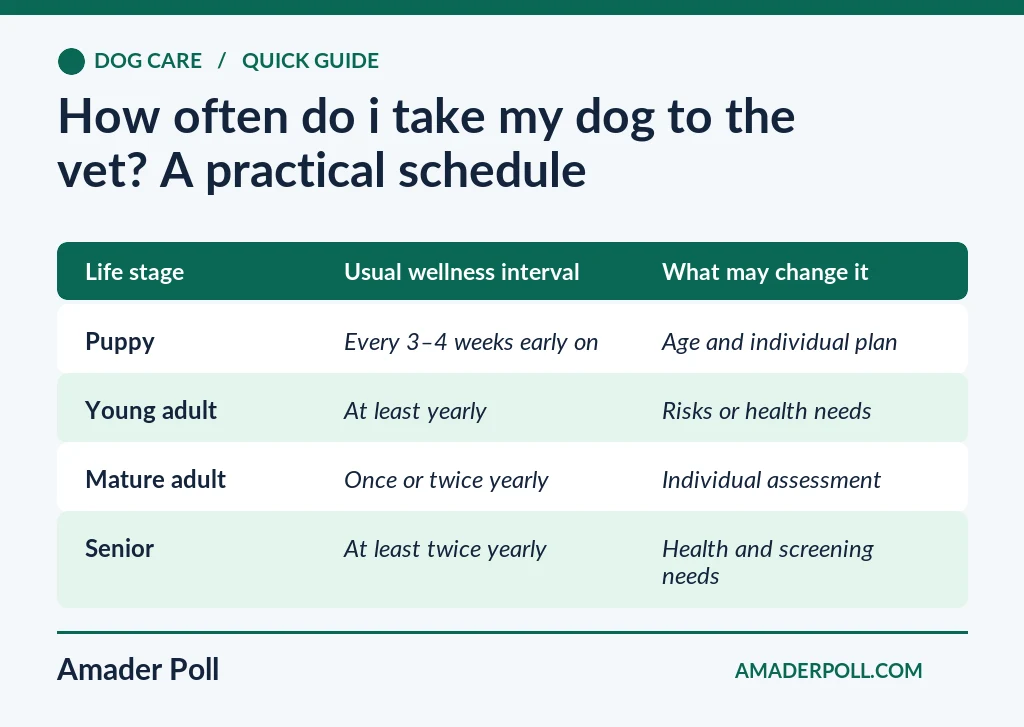
For a healthy dog, an annual veterinary examination is a useful baseline. The joint AAHA and AVMA guidelines say every dog should have an exam at least annually, while noting that some dogs need more frequent care based on individual needs. AAHA-AVMA canine preventive healthcare guidelines
That baseline is not a promise that a yearly appointment will suit every dog. A puppy’s rapid development means visits are closer together, and a senior dog may need twice-yearly checks. Dogs living with a health condition may also have follow-up appointments set by their veterinarian, even if they have already had a routine exam that year.
At a wellness visit, your veterinarian can review more than a vaccination record. The AAHA-AVMA guidance describes an assessment of medical history and lifestyle alongside a physical exam that includes dental health, pain, and body and muscle condition. It also calls for a tailored plan covering areas such as parasites, nutrition, behavior, and follow-up. AAHA-AVMA canine preventive healthcare guidelines
Think of the intervals below as planning prompts, then ask your clinic to set a schedule for your dog. When you book, mention any new symptoms, medicines, changes in activity, or questions about eating and behavior. That gives the veterinary team useful context for deciding whether the next appointment should be a routine checkup or a sooner assessment.
Puppy visits are closer together

Puppies need several appointments during early growth rather than a single annual checkup. The AAHA life-stage guide describes a first veterinary visit at about 6 to 8 weeks, followed in many cases by visits every 3 to 4 weeks until roughly 4 to 5 months old. The exact plan depends on the puppy and the veterinarian’s recommendations. AAHA dog life-stage guide
These visits are opportunities to check development and discuss preventive care, not merely to mark dates on a calendar. The guide notes that a first visit may include reviewing health records and discussing socialization, behavior, nutrition, microchipping, and parasite prevention. Bring any records you received when you adopted or purchased the puppy so the clinic can consider what has already been done.
A puppy’s schedule can vary with health history and circumstances, so do not assume that a missed or delayed appointment should simply wait until the next annual visit. Call the clinic, explain the puppy’s age and what appointments or records are available, and ask how to get back on a suitable plan. The veterinary team can advise on timing for that puppy without relying on a generic schedule alone.
Puppy visits also help establish how your dog responds to travel and handling. If your puppy seems fearful, tell the clinic when booking and ask what preparation may make the visit easier. Keep the appointment focused on the puppy’s needs and ask which questions should be addressed now versus at a later checkup.
Young adult dogs usually need at least yearly care
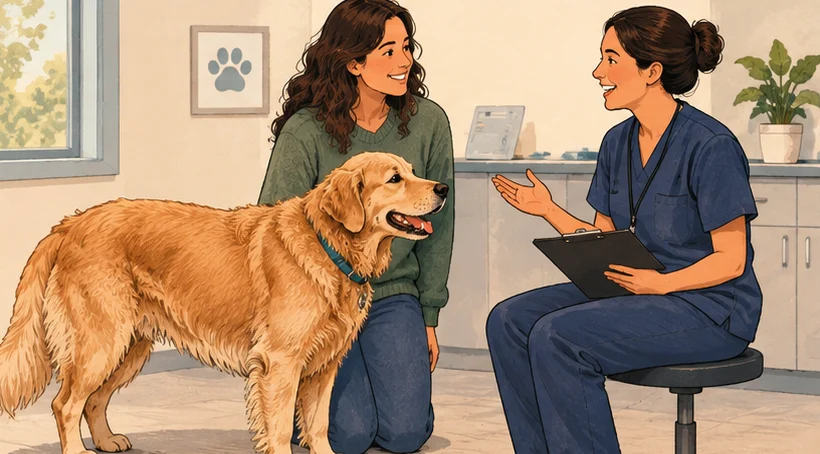
Once a dog has moved beyond puppyhood, a healthy young adult generally needs a wellness exam at least once a year, with extra visits as needed for illness or injury. Some young adults may benefit from twice-yearly appointments depending on breed, lifestyle, and health risks. AAHA dog life-stage guide
The purpose of a yearly visit is to review what has changed, even when your dog seems well. The AAHA guide lists topics such as weight, dental care, diet, behavior, and parasite prevention among the areas that may come up. Your veterinarian can also consider whether screenings or other preventive steps fit your dog’s individual assessment.
| Life stage | Usual wellness interval | What may change it |
|---|---|---|
| Puppy | Every 3–4 weeks early on | Age and individual plan |
| Young adult | At least yearly | Risks or health needs |
| Mature adult | Once or twice yearly | Individual assessment |
| Senior | At least twice yearly | Health and screening needs |
A dog that spends time in group settings or outdoors may have different preventive-care questions from a dog with a more sheltered routine. That does not automatically mean a particular appointment interval; it means sharing the dog’s activities and exposure with the veterinarian. The clinic can use that context when discussing parasite control and other preventive care.
Mature adults may need one or two checkups a year
Mature adult dogs may have wellness exams once or twice a year, depending on their individual needs. This stage begins at different ages for different dogs, since breed and size affect how dogs mature and age. AAHA dog life-stage guide
A dog can appear energetic while small changes are developing. At this stage, tell the veterinarian about shifts in stamina, appetite, weight, mobility, or behavior, even if they seem minor. That information helps the team decide whether to keep the current routine or recommend an earlier recheck or additional assessment.
Your veterinarian may discuss blood work or other tests based on the dog’s age and health assessment. The AAHA guide notes that mature adult visits may include consideration of routine laboratory testing and screening for age-associated concerns. AAHA dog life-stage guide Ask what a proposed test is intended to assess and how the result would affect the care plan.
For example, if a mature dog is recovering from an injury or has a health condition being monitored, the next visit may be scheduled sooner than the routine wellness appointment. Follow the timing your veterinarian gives for that specific concern rather than treating the annual visit as a substitute for follow-up. If you are unsure whether a change can wait, call the clinic and describe it.
Senior dogs often benefit from twice-yearly exams
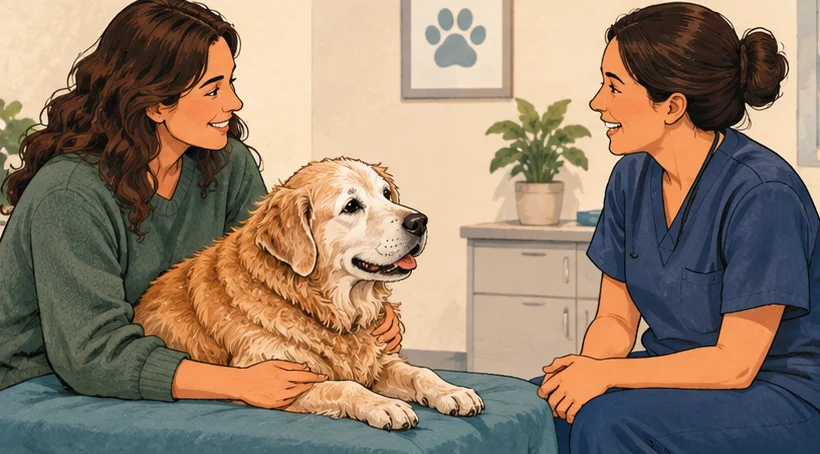
Senior dogs should generally have a physical exam at least twice a year, according to AAHA’s senior-dog guidance. The visits give the veterinary team regular opportunities to assess overall condition and discuss routine blood work or other screening when appropriate. AAHA senior dog guidance
“Senior” is not the same age for every dog. Life stage depends in part on breed and size, so ask your veterinarian when your dog is entering this stage rather than relying on one age cutoff. Once your dog is considered senior, ask whether twice-yearly appointments are suitable or whether health needs call for a different follow-up plan.
At home, keep track of changes that may be easy to overlook when they develop gradually. The senior-care guidance specifically encourages discussing mobility and activity, behavior, nutrition, and changes in seeing, hearing, or moving with the veterinary team. AAHA senior dog guidance A short note of what changed and when can make those conversations more useful.
More frequent exams do not mean every senior dog needs the same tests or treatment. The veterinarian can tailor screening and recommendations to the individual dog’s history and exam. If a new concern appears between scheduled visits, contact the clinic rather than waiting for the next twice-yearly checkup.
Preventive appointments and urgent concerns need different timing
A wellness visit is planned care for a dog who is not currently experiencing a sudden problem. It is a chance to review health and lifestyle, examine the dog, discuss prevention, and agree on when to return. The AAHA-AVMA guidelines recommend establishing a follow-up plan based on the assessment and setting expectations for the next visit. AAHA-AVMA canine preventive healthcare guidelines
Illness or injury is a different reason to contact a veterinarian. Do not wait for an annual or twice-yearly wellness appointment if your dog has a new, concerning change or has been injured. Call your regular clinic, describe what happened and when, and ask how quickly the dog should be seen; if the clinic is closed, ask how to reach an appropriate urgent-care service.
The interval can also change when your dog’s circumstances change. A new health concern, a change in activity or living environment, or a shift in behavior or diet may be relevant to the next appointment. The guidelines direct veterinarians to consider health history, lifestyle, life stage, behavior, and diet when assessing a dog, so share those details rather than assuming the old schedule still fits. AAHA-AVMA canine preventive healthcare guidelines
Some preventive tasks have their own timing and should not be confused with the exam interval. The AAHA-AVMA guidance calls for annual heartworm testing and at least annual internal parasite testing, with other recommendations customized to the dog’s assessment. AAHA-AVMA canine preventive healthcare guidelines Ask your veterinary team which checks apply to your dog and when they are due; do not infer that a test schedule replaces a physical exam.
Frequently asked questions
Is one vet visit a year enough for every dog?
No. Annual exams are a minimum general baseline, but puppies, senior dogs, and dogs with individual health needs may need more frequent appointments. AAHA-AVMA canine preventive healthcare guidelines
How often should a puppy go to the vet?
Many puppies start at about 6 to 8 weeks and return every 3 to 4 weeks until around 4 to 5 months. Ask your veterinarian to set the schedule for your puppy. AAHA dog life-stage guide
How often should a healthy adult dog have a checkup?
At least once a year is a reasonable starting point. Some dogs may benefit from twice-yearly visits based on their health risks and lifestyle. AAHA dog life-stage guide
Do senior dogs need more frequent visits?
AAHA recommends a physical exam at least twice a year for senior dogs. Your veterinarian can tailor the schedule and any screening to your dog. AAHA senior dog guidance
Should I wait for a routine appointment if my dog seems unwell?
No. Contact a veterinary clinic about a new concerning change or injury and ask how soon your dog should be seen. Routine wellness visits do not replace care for a current problem.
Does a vet visit always mean vaccinations?
No. A wellness appointment can cover a physical exam, dental health, behavior, nutrition, parasites, and other preventive needs. Ask the veterinarian which parts of the plan are relevant to your dog. AAHA-AVMA canine preventive healthcare guidelines
The bottom line
If you are deciding how often do i take my dog to the vet, start with the life-stage pattern: puppies need a series of early visits, healthy adults generally need at least yearly exams, and seniors should usually be examined at least twice a year. Those are useful starting points, not a replacement for a schedule based on your dog’s health and circumstances.
Keep routine wellness care separate from illness or injury: call the clinic about a new concern instead of waiting for the next scheduled checkup. At each visit, ask when your dog should return and what changes would justify calling sooner. A clear plan makes it easier to keep preventive care on track while responding promptly when your dog’s needs change.