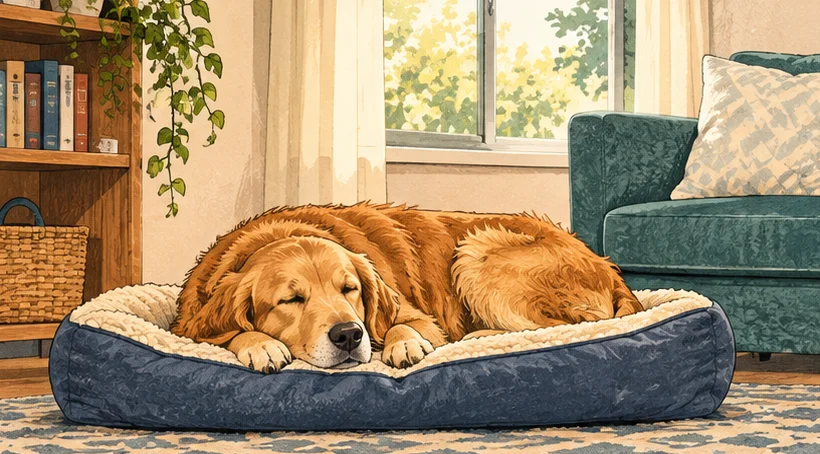
how long can i leave my dog home alone? A plan for everyday absences
There is no universal maximum that works for every dog. Age, health, toileting needs, experience with being alone, and behavior during an absence all shape what is manageable. A dog who rests through a familiar short errand may struggle when the time away stretches, particularly after a change in routine.
If you are wondering how long can i leave my dog home alone, start with the time your dog currently handles calmly, not a general rule. Observe what happens while you are away, then adjust the plan or arrange help if needed. Find more care topics in the Pet category.
how long can i leave my dog home alone? Start with the individual dog
Think about the whole stretch between your dog’s last chance to go outside and the next one. Can your dog rest, stay safe, and wait comfortably for that outing? A newly adopted dog, one unfamiliar with being alone, or one adjusting to a household change may need a different plan from a dog already settled in a similar routine.
Consider changes in the dog’s life as well as the length of the absence. The ASPCA notes that abrupt changes in when or how long a dog is left alone have been associated with separation anxiety. ASPCA guidance on routine changes If a work schedule is about to change, arrange a gradual transition or a check-in instead of suddenly leaving the dog alone for much longer.
Age and health affect planning, but neither supplies an exact safe duration by itself. A puppy learning house training may need more frequent outdoor opportunities, while an older dog or one with health needs may need an individualized routine. If toileting habits change suddenly, or a dog who previously managed a schedule begins having accidents, contact a veterinarian to discuss possible medical causes.
Use what you know about the dog rather than assumptions about breed. A dog who has not been left alone much may need practice even if the home is familiar. When you do not know how the dog behaves in your absence, choose a shorter first outing and observe before planning a longer one.
Plan an adult workday with a check-in
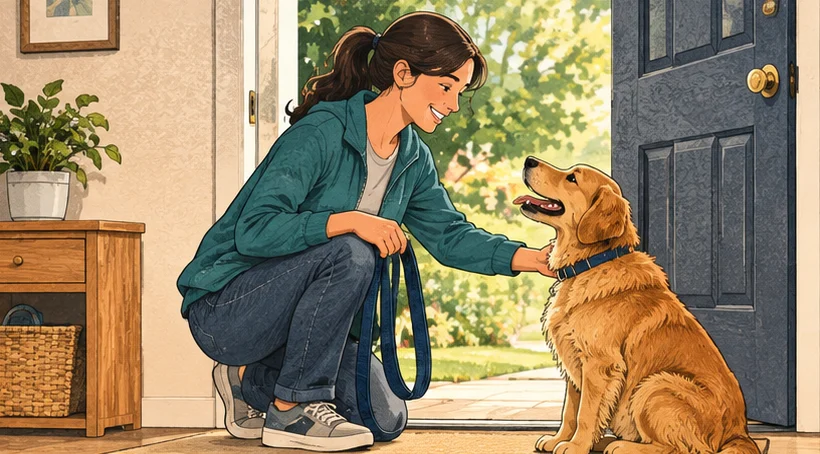
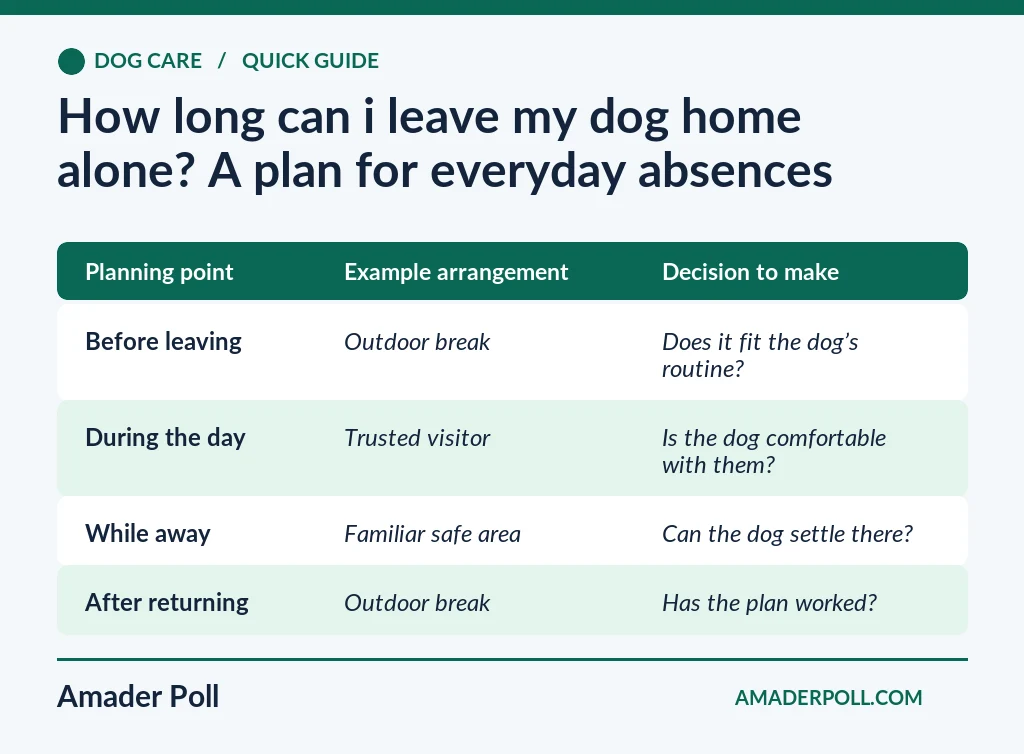
An adult dog’s workday routine can be a planning example, not a promise that every adult dog can manage the same stretch. For instance, an owner leaving for a morning shift might offer an outdoor break beforehand, arrange for a trusted person to visit during the day, and take the dog out again after returning. The visit can break up the day and provide a chance to check on the dog, but it does not establish that the overall schedule suits that individual.
Choose a helper the dog knows, or arrange a calm introduction before the first visit. Explain the usual routine, safe areas, and where supplies are kept, and agree on what the visitor should do if the dog seems unsettled or your return is delayed. A check-in is practical support; it is not a substitute for checking whether the dog is coping.
| Planning point | Example arrangement | Decision to make |
|---|---|---|
| Before leaving | Outdoor break | Does it fit the dog’s routine? |
| During the day | Trusted visitor | Is the dog comfortable with them? |
| While away | Familiar safe area | Can the dog settle there? |
| After returning | Outdoor break | Has the plan worked? |
Plan for days that do not follow the calendar. Traffic, a late meeting, or a shift change can extend an absence, so decide in advance who can step in. If the dog has already shown distress during shorter periods, do not treat a midday visit as proof that a longer day will be fine; arrange support that reflects the dog’s current tolerance.
Teach puppies and inexperienced dogs in small steps
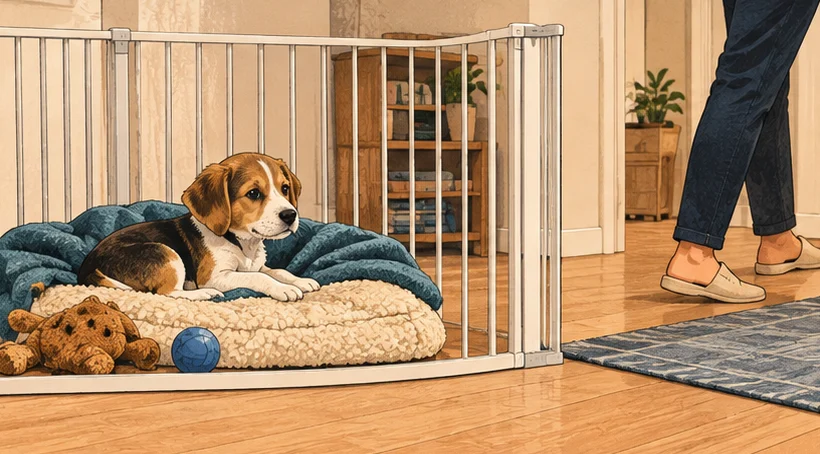
A puppy still learning house training and time apart needs a different starting point from a dog already comfortable at home alone. Begin with an absence short enough for the puppy to remain calm, even if that means stepping into another room briefly. The American Animal Hospital Association recommends starting with short absences and increasing gradually, returning before signs of distress begin. AAHA gradual desensitization guidance
Practice while you are home by setting up a familiar, comfortable space and stepping away briefly. Return while the puppy is settled, then repeat at a pace that remains manageable. If the puppy becomes upset, make the next practice shorter or easier rather than extending the absence in the hope that distress will pass.
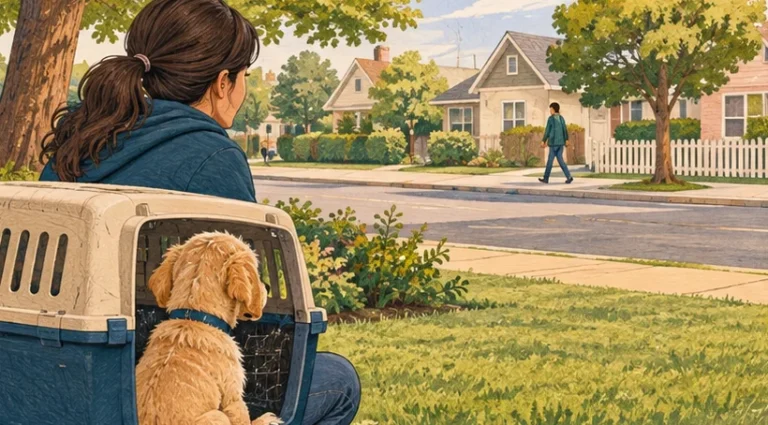
A crate is not automatically the right choice. Use one only if the dog is already comfortable there; a gated room or another secure familiar space may suit some dogs better. AAHA cautions that confinement can worsen distress for some pets with separation anxiety. AAHA guidance on safe spaces and confinement Choose the setup based on the dog’s response, not an assumption that one arrangement works for all.
Make the space safe and observe what happens
Before leaving, check the space from the dog’s point of view. Put away food, trash, cords, and objects the dog might chew or swallow, and check that doors and gates do not create an escape hazard. Choose a familiar area where the dog can rest and move comfortably. A safe room reduces some preventable hazards, but it does not tell you by itself whether the dog feels at ease.
Keep departures predictable and offer familiar bedding or an activity the dog already knows how to use. A walk or play session beforehand may fit the dog’s normal routine, but exercise, a toy, or background sound should not be treated as proof that distress will resolve. If the dog ignores an activity and remains unsettled, reconsider the length or setup of the absence rather than simply adding distractions.
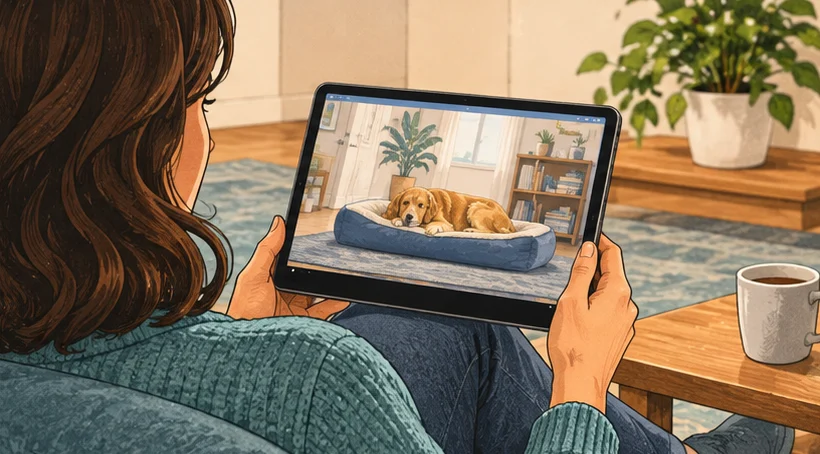
Observe the dog during the absence when possible, not only at the moment you return. A camera may show whether the dog rests, paces, barks, or stays near an exit; without one, note accidents, damage, or reports of persistent noise. AAHA says video recordings can help a veterinarian or veterinary behaviorist understand what happens while a pet is alone. AAHA advice on observing pets alone
Use observations to make one practical adjustment at a time. If the dog settles during a short absence, repeat that manageable period before increasing it. If the dog paces or vocalizes, shorten the next practice and consider arranging a visit. A tidy room is not the only measure of success; look for whether the dog can rest and stay safe, too.
Recognize possible distress and respond calmly
Accidents, persistent barking or howling, chewing, digging, pacing, and escape attempts can be signs of separation anxiety, according to the ASPCA. ASPCA information on separation anxiety signs A single behavior does not establish a diagnosis, but a repeated pattern that appears when the dog is left alone deserves attention. Note when it starts and whether it happens in other situations.
Context can help distinguish a safety problem from a sign that the dog is struggling. A dog who chews at different times may need safer access to the home, while destruction focused around doors or windows during an absence may be more concerning. The ASPCA notes that escape attempts can result in injuries such as damaged nails or paws. ASPCA guidance on escape attempts If the dog may be injured, do not repeat the same setup just to see whether the dog adapts.
Do not punish a dog for a mess or damage discovered after you return. Clean up calmly and consider whether the dog needed an earlier outdoor break, a shorter absence, a safer space, or help with distress. Focus on preventing another difficult absence and understanding what the behavior may be communicating, rather than treating the result as deliberate disobedience.
Contact a veterinarian if behavior changes suddenly, accidents recur, or the dog seems unable to settle. Medical problems can cause some house-soiling issues, and the ASPCA recommends veterinary evaluation before behavior modification when medical causes may be involved. ASPCA guidance on medical concerns For ongoing distress or unsafe escape attempts, ask about appropriate behavior support; AAHA identifies injury during escape attempts and persistent distress as reasons to seek professional help. AAHA advice on seeking help
Adjust the plan using the dog’s response
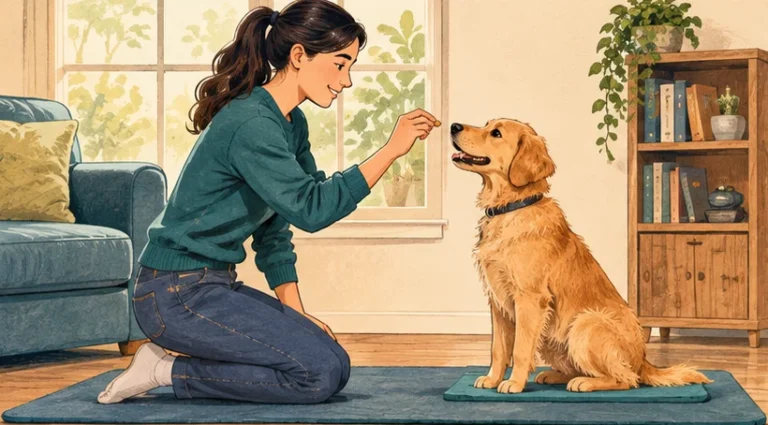
For a dog who is comfortable at home, start with a brief departure that is easier than the absence you eventually need. Return while the dog is calm, repeat that manageable length, and increase time only when the dog continues to settle. There is no timetable that applies to every dog; let the dog’s response guide the next step. AAHA recommends beginning with short absences and increasing gradually, returning before distress starts. AAHA gradual practice guidance
Departure cues can matter as well as time away. Picking up keys, putting on shoes, or reaching for a jacket may signal that someone is about to leave. AAHA suggests sometimes doing these actions without departing, so they do not always lead straight to an absence. For example, an owner might pick up the keys and then sit down again; if the dog becomes more unsettled, simplify the practice and ask for tailored advice.
Keep a brief record of absence length, toileting, behavior, and changes in routine. Notes can show whether an incident was isolated or part of a pattern, and give a veterinarian or behavior professional useful context. If the dog is calm at one length but distressed when it is extended, return to the calm length and build more slowly rather than following a preset calendar.
If work or caregiving demands exceed what your dog can manage now, arrange help while you work on gradual independence. A trusted person can visit, stay with the dog, or provide another suitable care arrangement. For severe distress, prioritize a safer, less distressing plan and professional guidance instead of testing how long the dog can endure an absence. See the Amader Poll Editorial Policy for more about our approach to responsible information.
Frequently asked questions
Can an adult dog stay home alone for a workday?
Some dogs may manage a familiar routine, while others need a visit or shorter absence. Use observed behavior and toileting needs instead of assuming every dog can manage the same schedule.
Should I leave a puppy alone for several hours?
Start with short, calm absences and account for house-training needs. Arrange help if the puppy cannot comfortably manage the time you need to be away.
Is a crate the answer for a dog home alone?
Only if the dog is already comfortable in it. Confinement can worsen distress for some dogs, so choose a setup based on the individual response.
How can I tell if my dog is distressed when I leave?
Look for repeated barking, pacing, accidents, destruction, or escape attempts. Video can help you see what happens after you leave.
Should I punish my dog for a mess I find afterward?
No. Clean up calmly and consider whether the dog needs an outdoor break, a shorter absence, a safer space, or veterinary guidance.
What if my dog suddenly cannot manage being alone?
A sudden change deserves attention. Contact a veterinarian to consider medical concerns and ask about behavior support if distress continues.
The bottom line
There is no universal answer to how long can i leave my dog home alone. Make the plan fit the dog’s age, health, toileting needs, familiar routine, and observed behavior. An adult workday schedule can be a useful example, but it is not a guaranteed safe duration for every dog.
Start with absences your dog can manage calmly, observe what happens, and increase time only when the dog remains settled. Arrange a check-in when the planned absence exceeds the dog’s current comfort, and seek veterinary guidance for sudden changes, repeated accidents, persistent distress, or unsafe escape attempts. The goal is a workable routine that meets the dog’s needs, not a one-size-fits-all maximum.