
The work from home vs office debate has transformed from a niche conversation among remote-work advocates into one of the defining workplace discussions of our era. The COVID-19 pandemic forced millions of workers and organisations around the world to reimagine where and how work happens. Now, several years on, the dust has settled enough to take a clear-eyed look at both sides of the argument. What are the real benefits and drawbacks of working from home versus working in an office? And why does personal preference vary so dramatically from one person to the next?
The Rise of Remote Work
Before 2020, remote work was considered a perk — something companies offered selectively, usually to high performers or as a retention tool. The idea that entire organisations could function effectively with employees scattered across cities, countries, and time zones was widely regarded with scepticism.
Then came the pandemic. Almost overnight, remote work became not a perk but a necessity. And something remarkable happened: for many organisations, productivity did not collapse. In fact, numerous studies and surveys suggested it held steady or even improved in certain roles and industries. The experiment was an accidental proof of concept — and the working world has never fully reverted.
Today, the dominant model for many knowledge workers is hybrid: some days in the office, some days at home. But the debate about which arrangement is truly better continues to simmer, with employers pushing for more office presence and employees often resisting.
The Case for Working From Home

Flexibility and Autonomy
The most cited benefit of working from home is flexibility. Without the constraints of commuting and a fixed office environment, many people find they can structure their days in ways that suit their natural rhythms. Early risers can start at dawn; night owls can work late. Parents can manage school pick-ups without guilt. People with chronic health conditions can manage their energy more effectively.
This autonomy has a measurable impact on job satisfaction. When people feel trusted to manage their own time, they tend to be more engaged and motivated — not less.
Productivity Gains
The open-plan office, for all its collaborative intentions, is a notorious productivity killer. Constant interruptions, noise, impromptu meetings, and social obligations fragment concentration in ways that remote workers simply do not experience to the same degree. Many knowledge workers report achieving more deep, focused work at home in a few hours than they would in a full day at the office.
Research conducted across multiple industries has consistently shown that remote workers often work longer hours than their office counterparts — not because they are exploited, but because they choose to, having reclaimed the time previously lost to commuting and office small talk.
Financial and Environmental Benefits
Working from home reduces the financial burden of commuting, work wardrobes, and daily lunches. For many workers, particularly those in expensive urban centres, these savings are substantial — potentially amounting to thousands of dollars per year.
The environmental impact is also worth noting. Fewer commuters on the road means reduced carbon emissions, lower traffic congestion, and decreased strain on public infrastructure. While the picture is nuanced — home heating and cooling costs rise, for instance — the overall environmental calculus often favours remote work.
The Case for the Office
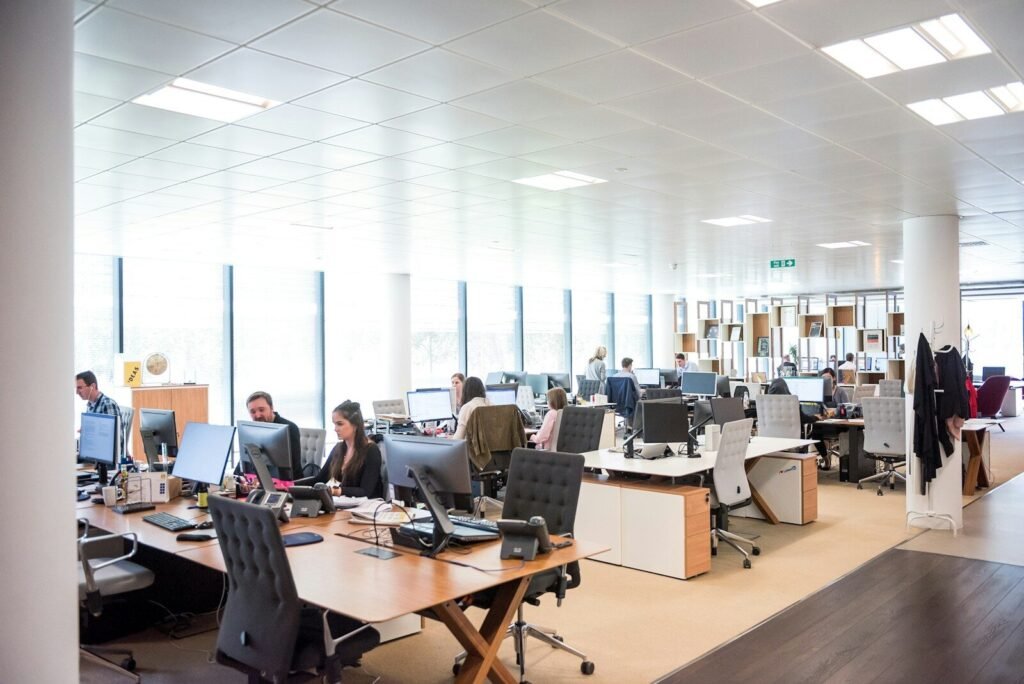
Collaboration and Spontaneous Connection
For all its drawbacks, the physical office enables a kind of spontaneous, organic collaboration that digital tools struggle to replicate. Running into a colleague in the hallway, overhearing a conversation that sparks a new idea, reading the body language of someone in a meeting — these micro-interactions accumulate into something meaningful that cannot be fully reconstructed over video calls.
Innovation, in particular, tends to thrive in environments where people can gather around a whiteboard, prototype together, and build on each other’s energy in real time. Many of the most creative and transformative ideas in business history were born in proximity, not over Slack.
Mental Health and Social Connection
Isolation is one of the most consistently reported drawbacks of full-time remote work. Human beings are inherently social, and the work from home vs office debate must reckon honestly with the toll that prolonged isolation takes on wellbeing. For many people — particularly those living alone, those who are extroverted, or those new to the workforce — the office provides a critical source of social connection and a sense of community.
Loneliness, anxiety, and blurred work-life boundaries are real risks of full-time remote work. The commute that so many workers loathe also serves as a psychological transition — a buffer between work and home that helps the brain shift gears. Without it, many people find it difficult to truly switch off.
Career Development and Visibility
There is strong evidence that office presence is still linked to career advancement in many organisations, whether this is fair or not. Being visible, building relationships with leadership, and demonstrating commitment through physical presence continues to influence promotion decisions, mentorship opportunities, and access to the most interesting projects.
Junior employees and those early in their careers may be particularly disadvantaged by full-time remote work, as they lose access to the informal learning that comes from sitting near experienced colleagues and absorbing how decisions are made in real time.
The Hybrid Model: The Best of Both Worlds?
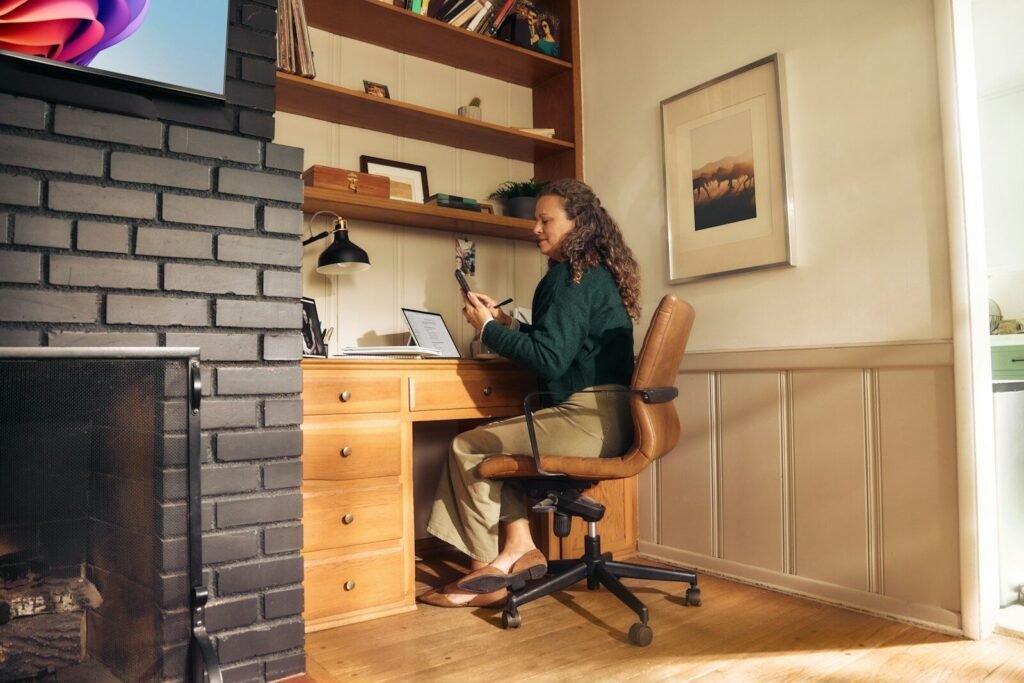
Most organisations have settled on a hybrid model as the practical compromise in the work from home vs office debate — typically two or three days in the office per week. The appeal is obvious: workers get flexibility and focused time at home, while organisations preserve the collaboration, culture, and visibility that physical presence enables.
But hybrid work is not without its complications. It requires careful coordination to ensure that in-office days are genuinely worthwhile rather than a perfunctory obligation. It can create inequities between employees who live near the office and those who do not. And it demands a higher standard of management, with leaders needing to be intentional about inclusion and communication in ways that pure office environments do not require.
What Does Research Actually Say?
The academic and corporate research on work location and performance is extensive and, frankly, somewhat contradictory — which is part of why the debate persists. Productivity studies tend to favour remote or hybrid work for individual task completion. Studies on innovation, culture, and long-term career outcomes tend to favour in-person presence.
The honest answer is that the optimal arrangement is highly individual. Introverts, deep-focus workers, experienced professionals, and parents with caregiving responsibilities often thrive at home. Extroverts, creative collaborators, apprentice learners, and those who struggle with self-motivation often flourish in the office.
What Do You Prefer?
Personal preference in the work from home vs office debate is shaped by a constellation of factors: personality, role, industry, home environment, commute length, life stage, and management style. Neither preference is wrong; both are valid responses to genuinely different needs.
The most important thing an organisation can do is stop treating this as a binary, one-size-fits-all question. The companies that will attract and retain the best talent in 2026 and beyond are those that create genuine flexibility — trusting their people to know where and when they do their best work, and building cultures robust enough to survive the distance.
Whether you are a passionate advocate for the home office or a devoted believer in the energy of a busy workplace, the future of work will likely be a negotiation — between individual preference, organisational need, and a shared responsibility to make whichever arrangement you choose as effective and humane as possible.
Further Reading
The Australian Government’s Fair Work Ombudsman provides guidance on flexible working arrangements and employee rights at Fair Work Ombudsman – Flexible Working, which is essential reading for both employees and employers navigating this evolving landscape.