how often to wash newborn hair: a gentle bath-night routine
How you decide “how often to wash newborn hair” depends on a few practical details: whether to use water or cleanser, how to rinse without getting suds in the eyes, and how much product is enough. A simple starting point is to treat scalp rinsing and shampooing as separate choices. Clean-looking hair may need no cleanser at all, and a wash can be brief.
This guide focuses on the hands-on routine rather than setting another bathing schedule. You can find broader guidance in our newborn bathing guide and browse more advice in the Baby Bath section. The practical decision is whether to leave clean hair alone, rinse with plain water, or use a little cleanser when there is residue to remove.
how often to wash newborn hair: separate rinsing from shampooing
There is no need to make shampoo part of every bath. The American Academy of Pediatrics says three baths a week during a baby’s first year may be enough, because newborns rarely sweat or get dirty enough to need a daily bath. That is general bath guidance, not a required hair-washing or shampoo schedule. HealthyChildren.org’s newborn bathing guidance
Consider what is actually on the scalp before deciding. If the hair and scalp look clean, you can leave them alone; if you are already bathing your baby and want to freshen the hair, a gentle water rinse may be enough. A bath night is an opportunity to wash hair, not a reason to shampoo automatically.
For example, if your baby’s hair looks clean after a day indoors, you can skip the hair step or simply dampen it with a cloth. If a little milk or other everyday residue is visible, first see whether it lifts with water. This keeps the choice tied to the situation instead of a fixed routine.
A scalp concern is a different matter from ordinary cleaning. Cradle cap is not caused by poor hygiene, according to MedlinePlus, so washing more often or scrubbing harder is not a sensible response to flakes. MedlinePlus guidance on cradle cap If persistent scales are the issue, see the section on flakes below rather than treating them as dirt.
Choose plain water or a little cleanser
Plain water is a useful default for newborn hair, particularly in the first month. NHS guidance says liquid cleansers are not needed during that month and describes washing the baby’s hair with plain water. NHS guidance on bathing your baby Wet a clean, soft cloth and gently pass it over the hair, or use your hand to guide a small amount of water over the scalp.
If water removes what you wanted to wash away, stop there. There is no need to add cleanser just to make a lather or to make a routine feel complete. If residue remains and you decide to use a cleanser, use a small amount and follow the product’s directions. General bathing guidance cited here does not specify a measured quantity, so avoid treating a particular amount as a medical rule.
| What you notice | First step | Cleanser? |
|---|---|---|
| Clean-looking hair | Leave it or rinse with water | Not needed |
| Light residue | Try a damp cloth | Start without it |
| Residue remains | Wash gently | A little may help |
| Persistent flakes | Handle gently | Ask about scalp care |
Think of “a little” as enough to wash the area without creating excess suds, rather than as a precise dose. Apply it gently with your fingertips, not your nails, and avoid vigorous rubbing. If you are unsure whether a product is suitable for your newborn, ask your baby’s health care provider rather than relying on a general routine.
Rinsing matters whenever you use cleanser. MedlinePlus specifically advises rinsing shampoo off thoroughly as part of its cradle-cap care guidance. MedlinePlus guidance on cradle cap For an ordinary wash, the practical takeaway is to use clean water and check that the hairline and scalp no longer feel slippery before you finish.
Get supplies ready and support your baby
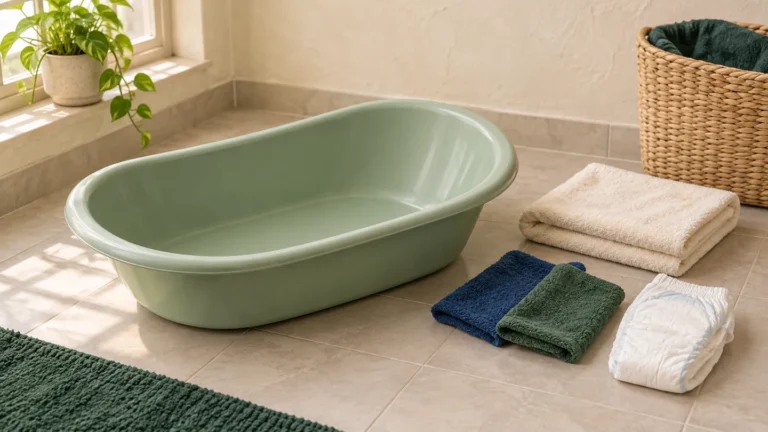
Gather a soft washcloth, a towel, and any cleanser you have decided to use before starting. Keeping supplies within reach means you are less likely to turn away or search for something while holding your baby. The AAP recommends preparing bath supplies in advance and keeping a hand on the baby during the bath. HealthyChildren.org’s newborn bathing guidance
Check the water before you begin. NHS guidance says to mix bath water well and check that it does not feel too hot or too cold; the AAP advises checking that it feels warm, not hot, against the inside of your wrist or elbow. NHS guidance on bathing your baby HealthyChildren.org’s newborn bathing guidance For a hair rinse, use a small, controlled amount rather than a sudden pour.
Choose a position in which you can support your baby’s head and shoulders and keep the face clear of the water. If you are giving a sponge bath, keep the baby wrapped in a dry towel and uncover only the part you are washing; the AAP recommends this approach to help keep a baby warm during a sponge bath. HealthyChildren.org’s newborn bathing guidance
Plan a simple order before wetting the hair: face first, then hair, then the rest of the wash. Both the NHS and AAP guidance describe beginning with the face during a baby’s wash. NHS guidance on bathing your baby HealthyChildren.org’s newborn bathing guidance A familiar sequence helps keep the hair step calm and prevents a cleanser from becoming an automatic first choice.
Keep water and suds away from the eyes
Support your baby’s head and shoulders before you wet the hair, with the face above the bath water. Use a damp cloth or your cupped hand to guide water over the scalp in small amounts. NHS guidance describes washing the hair with plain water while supporting the baby and keeping the head clear of bath water. NHS guidance on bathing your baby
If you use cleanser, apply it to the hair and scalp carefully, keeping it away from the face. Position your hand or cloth so water runs away from the eyes rather than across the forehead. A controlled rinse is easier to direct than a large pour, especially when your baby is moving or the washing area is small.
If your baby squirms, pause instead of trying to finish quickly. Keep supporting the head, settle your baby, and resume only when you can hold them steadily and watch their face. The hair wash does not need to happen in one uninterrupted motion; a brief pause is a practical way to keep the rinse controlled.
If water or suds reach the face, stop adding cleanser and gently wipe the area with a clean, damp part of the cloth. Do not rub the eyes. If cleanser remains in the hair, rinse it away with fresh water, using a clean section of cloth as needed. These steps are for ordinary washing; contact a health care professional if you are concerned about your baby’s eyes.
Treat flakes gently instead of scrubbing
A few flakes do not automatically mean that a scalp needs a stronger or more frequent wash. MedlinePlus says cradle cap is not caused by poor hygiene and is not contagious. MedlinePlus guidance on cradle cap Avoid picking at scales or trying to scrape them off during a routine bath; gentle handling is different from trying to remove every visible flake at once.
For cradle cap, MedlinePlus describes gentle daily shampooing with a mild shampoo while scales are present, followed by shampooing twice weekly after they disappear. It also advises gentle massage with fingers or a soft brush and thorough rinsing. MedlinePlus guidance on cradle cap This is specific care guidance for cradle cap, not a general washing schedule for every newborn.
For example, if you spot a few flakes during a bath but your baby otherwise seems comfortable, do not respond by scrubbing harder or adding more product. Wash gently and observe whether the area changes. If you think the scales are persistent or you are unsure whether specific care applies, ask your baby’s provider for individual advice.
MedlinePlus advises contacting a provider if scalp symptoms do not go away or get worse with home care, or if patches become very red or painful, develop crusts, or drain fluid or pus. It also lists fever as a reason to contact a provider. MedlinePlus guidance on cradle cap These signs call for medical guidance, not a more forceful wash.
Make hair washing a brief bath-night step
A simple routine can be: gather supplies, check the water, and make sure your baby is securely supported. Wash the face, then wet the hair with a damp cloth or a small controlled amount of water. If the scalp looks clean, rinse and move on; if you have decided cleanser is needed, use a little and rinse it away carefully.
After washing, lift your baby out safely and pat the hair and skin dry rather than rubbing briskly. The NHS recommends patting a baby dry and paying attention to skin creases after bathing. NHS guidance on bathing your baby For example, on a night when the hair is clean, you might use a damp cloth, pat it dry, and finish dressing your baby without shampoo.
If the umbilical cord stump has not fallen off, the AAP advises sponge baths until it does, which usually happens around one or two weeks of age. HealthyChildren.org’s newborn bathing guidance In that situation, use a damp cloth for the hair and keep the rest of your baby warm. Ask your baby’s provider if you have questions about the cord area or your baby’s care.
Keep the routine flexible. Hair does not need to be washed just because the rest of the baby is having a bath, and plain water may be enough when you do rinse it. Never leave a baby alone in the bath, even for a moment; the AAP recommends touch supervision throughout. HealthyChildren.org’s newborn bathing guidance A short wash works best when you can keep your attention on your baby.
Frequently asked questions
Do I need to shampoo my newborn’s hair at every bath?
No. If the hair is clean, leave it alone or rinse with water; shampoo is not an automatic part of bath night.
Can I wash newborn hair with plain water?
Yes. NHS guidance describes washing a baby’s hair with plain water and says liquid cleansers are not needed in the first month. NHS guidance on bathing your baby
How much cleanser should I use?
General bathing guidance does not give a measured amount. If you choose to use cleanser, use a small amount, follow its directions, and rinse thoroughly.
How can I keep suds out of my baby’s eyes?
Support your baby’s head and use a damp cloth or small amounts of water. Pause if your baby squirms so you can regain a steady hold.
Should I scrub cradle cap flakes away?
No. MedlinePlus recommends gentle massage with fingers or a soft brush rather than scraping. MedlinePlus guidance on cradle cap
Can I give a regular bath before the cord stump falls off?
The AAP advises sponge baths until the stump falls off. Ask your baby’s provider if you have questions about the cord area. HealthyChildren.org’s newborn bathing guidance
The bottom line
how often to wash newborn hair depends less on a fixed shampoo calendar than on what the scalp needs. Clean hair can be left alone, and plain water is a sensible starting point, especially during the first month. If you use cleanser, keep it to a small amount and rinse carefully.
Support your baby securely, guide water away from the face, and keep the wash brief. Treat flakes gently rather than scrubbing, and ask your baby’s provider about persistent or worsening scalp symptoms. A calm rinse, or no hair wash at all, can be the right choice on an ordinary bath night.