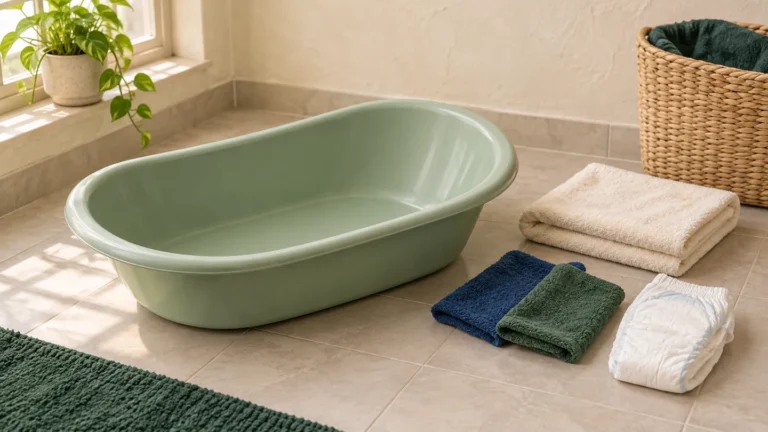
how often should you bathe a 5 month old
At five months, a full bath is usually a few-times-a-week job, not a daily requirement. If you are wondering how often should you bathe a 5 month old, start with two or three short baths a week, then adjust to your baby’s skin and the messes of the day. Drool, milk, and diaper mess may call for a quick wash between baths, but those cleanups do not have to become full-body bathing.
A useful routine separates ordinary spot-cleaning from bath time: wipe the face, neck folds, hands, or diaper area when needed, and bathe the rest of the body on convenient days. For example, a drooly afternoon might mean cleaning beneath the chin and changing a damp shirt, not adding an extra bath. Keep safety steps the same every time, whether the bath is planned or prompted by a spill.
how often should you bathe a 5 month old?
For most five-month-olds, two or three full baths a week is a reasonable starting point. The American Academy of Pediatrics says three baths weekly during a baby’s first year may be enough, and more frequent bathing can dry the skin. American Academy of Pediatrics guidance on bathing frequency You can space those baths across the week, such as Monday, Thursday, and Saturday, or choose days that fit your family’s routine.
A bath can be added when your baby is especially messy or covered in something that is easier to rinse away than to clean with a cloth. It is also fine to bathe more often if your baby enjoys it and their skin tolerates it; the NHS says a daily bath is an option when both parent and baby enjoy it. NHS guidance on how often to bathe a baby If skin starts looking dry, consider returning to fewer full baths and using brief spot-cleaning between them.
Think of the weekly pattern as a flexible guide, not a cleanliness test. For example, if a planned bath falls on a day when your baby stayed clean and seems tired, you can skip it and wash only the areas that need attention. If a diaper leak or messy spit-up happens, clean the affected skin promptly rather than waiting for bath day. A routine should respond to what actually needs washing, not require a full bath just because it is on the calendar.
Clean drool and diaper mess between baths
Drool can collect under the chin and in the neck folds, where damp skin may remain hidden beneath a bib or clothing. When you notice wetness or residue, gently wipe the area with a soft, damp cloth, then pat it dry, taking care to look at the folds rather than wiping only the visible front of the neck. This small cleanup is separate from a full bath and can be repeated as needed.
For a diaper change, clean the bottom and genital area when it is soiled, then dry the skin folds before putting on a clean diaper. A bowel movement or leak may mean washing more than usual; a routine wet diaper change may not require a full bath. As a practical example, after a messy leak you could use warm water and a cloth at the changing area, then save the bath for its usual day if the rest of your baby is clean.
Milk, spit-up, and everyday residue around the face and hands can also be wiped away as they occur. Use a fresh area of the cloth when moving from the face to the diaper area, and avoid scrubbing delicate skin. If a quick wipe leaves residue in a crease, clean that specific spot again rather than adding an unnecessary long bath. The aim is to remove visible mess while leaving the rest of the skin alone.
Plan a bath around the day’s needs
A predictable bath time can make preparation easier, but it does not need to be tied to a particular hour. Choose a time when you can give your baby your full attention and have towels, a clean diaper, and clothing ready before starting. If your baby seems unsettled, a short wash another time or a focused cloth cleanup may be more practical than trying to complete a bath on schedule.
For each bath, gather what you need before your baby is near the water. Keep the water warm rather than hot, and check it with your wrist or elbow; never place your baby under running water because its temperature can change. American Academy of Pediatrics guidance on checking bath water A small amount of water in a safe infant tub is sufficient for washing, and the bath can stay brief.
The table below offers a simple way to decide what kind of cleanup fits the situation. These are everyday examples, not a required timetable; the important distinction is whether your baby needs a targeted wash or a full bath. If the mess is limited to one area, clean that area rather than automatically bathing the whole body. For instance, a bib soaked with drool can be changed while you wipe and dry the skin underneath.
| Situation | What to clean | Full bath? |
|---|---|---|
| Damp drool in neck folds | Wipe and pat dry | Usually not needed |
| Diaper leak | Clean bottom and folds | Only if mess spreads |
| Ordinary clean day | No extra washing | Follow your routine |
| Widespread messy spill | Rinse or wash affected areas | May be useful |
Keep the routine gentle for skin
A bath does not need to last long to get your baby clean. For dry or sensitive skin, the AAP recommends keeping bath time under 10 minutes, using lukewarm water, and avoiding bubble baths and scented soaps that may irritate or dry the skin. American Academy of Pediatrics advice for dry skin If you use a cleanser, choose a fragrance-free, non-soap option rather than treating strong fragrance or lots of foam as a sign of better cleaning.
Afterward, pat the skin dry with a soft towel rather than rubbing, and check the neck, armpits, and other folds for trapped moisture. The AAP advises applying moisturizer to damp skin after bathing when managing dry skin. American Academy of Pediatrics advice on moisturizing after a bath If your baby’s skin is comfortable, there is no need to turn every bath into a complicated routine; focus on gentle handling and notice whether your usual frequency seems to leave the skin dry.
If dryness becomes a recurring concern, try reducing full baths and use targeted cleaning between them. Avoid switching repeatedly among scented products or adding bubble products to make bath time more entertaining, since these can be irritating for some children. For ongoing dry or irritated skin despite simple routine changes, the AAP advises talking with your pediatrician. American Academy of Pediatrics advice on persistent dry skin General bathing guidance cannot determine what is right for an individual skin condition.
Use a calm, repeatable bath routine
Set up the room and supplies before undressing your baby, so you are not searching for a towel once the bath has started. Keep your baby warm, undress only when you are ready, and lower them gently into the water while supporting their head and body. Wash the face and hair gently, then the rest of the body and diaper area. Lift your baby out carefully and pat dry, paying attention to folds.
The NHS suggests avoiding a bath when a baby is hungry, tired, or just fed. NHS guidance on choosing a time for a bath In practice, that means you can choose a calm window rather than insisting on a fixed bedtime bath. If your baby becomes upset, keep the wash brief and reassuring; you can finish cleaning a small area with a cloth later instead of prolonging a difficult bath.
A five-month routine might look like two or three short baths on convenient days, with face, neck, hands, and diaper-area cleanup whenever those areas get messy. One family might bathe after a particularly messy day, while another might keep a regular evening schedule. Neither example requires bathing daily. If you want more detail on first-bath basics, the newborn bathing guide covers earlier bathing questions; at five months, the same basic ideas of gentle washing and close supervision still matter.
Make bath safety the fixed part of the routine
Stay within arm’s reach and keep a hand on your baby throughout the bath. Never leave a baby alone in bathwater, even briefly, and do not step away to answer a phone or retrieve a forgotten item. The AAP advises taking the baby with you if you must leave, even for a moment. American Academy of Pediatrics bath supervision guidance Put towels and supplies within reach before the bath so you can maintain supervision.
Do not assume your baby can sit steadily just because they are five months old, and do not treat a bath seat as protection. The AAP warns against bath seats because they can tip, allowing a child to fall into the water. American Academy of Pediatrics guidance against bath seats Use an appropriate infant bathing setup and hold your baby securely; a seat does not replace an adult’s continuous attention.
Before placing your baby in the tub, check that the water feels warm, not hot, and turn off the faucet. Keep the baby’s face clear of the water and use only a shallow amount. American Academy of Pediatrics guidance on infant bath setup If bath time is interrupted, take your baby out with you rather than leaving them in the tub while you handle the interruption. These safety steps apply to every bath, even a quick rinse, so do not treat a shorter bath as a reason to relax supervision.
Frequently asked questions
Is a daily bath necessary at five months?
No. Two or three full baths a week may be enough during the first year; clean drool, diaper mess, and other soiled areas between baths.
Can I bathe my baby more often than three times a week?
Yes, if you and your baby enjoy it and their skin tolerates it. If dryness appears, reduce full baths and use targeted cleanups.
Should I bathe my baby after every diaper leak?
Clean the soiled skin promptly, but a full bath is not always needed. If the mess is limited, wash that area and dry the folds.
What if drool stays in the neck folds?
Gently wipe the folds and pat them dry when you notice moisture or residue. Check under the chin rather than cleaning only the exposed skin.
How long should a bath last?
Keep it brief. For dry or sensitive skin, the AAP suggests less than 10 minutes; lukewarm water and gentle washing are appropriate.
Can I use a bath seat if my baby is not sitting steadily?
No. A bath seat is not a safety substitute, and the AAP advises avoiding bath seats. Stay with your baby and keep a hand on them.
The bottom line
how often should you bathe a 5 month old depends partly on skin tolerance and the messes of the day, but two or three full baths a week is a practical starting point. Wipe drool, clean diaper mess promptly, and wash only the areas that need attention between baths.
Keep baths brief and gentle, prepare supplies first, and supervise continuously with a hand on your baby. Skip the bath seat, never assume your baby can sit safely, and adjust the routine if bathing seems to leave the skin dry. For more age-related articles, visit the Baby Bath section.