

Baby / Baby Bath
bath newborn how often? A Calm Guide for New Parents
This guide provides general information, not individual medical advice. No independent medical review is claimed.
Amader Poll may earn a commission from qualifying links at no extra cost to you. This guide contains no affiliate shopping links. Read our Affiliate Disclosure.
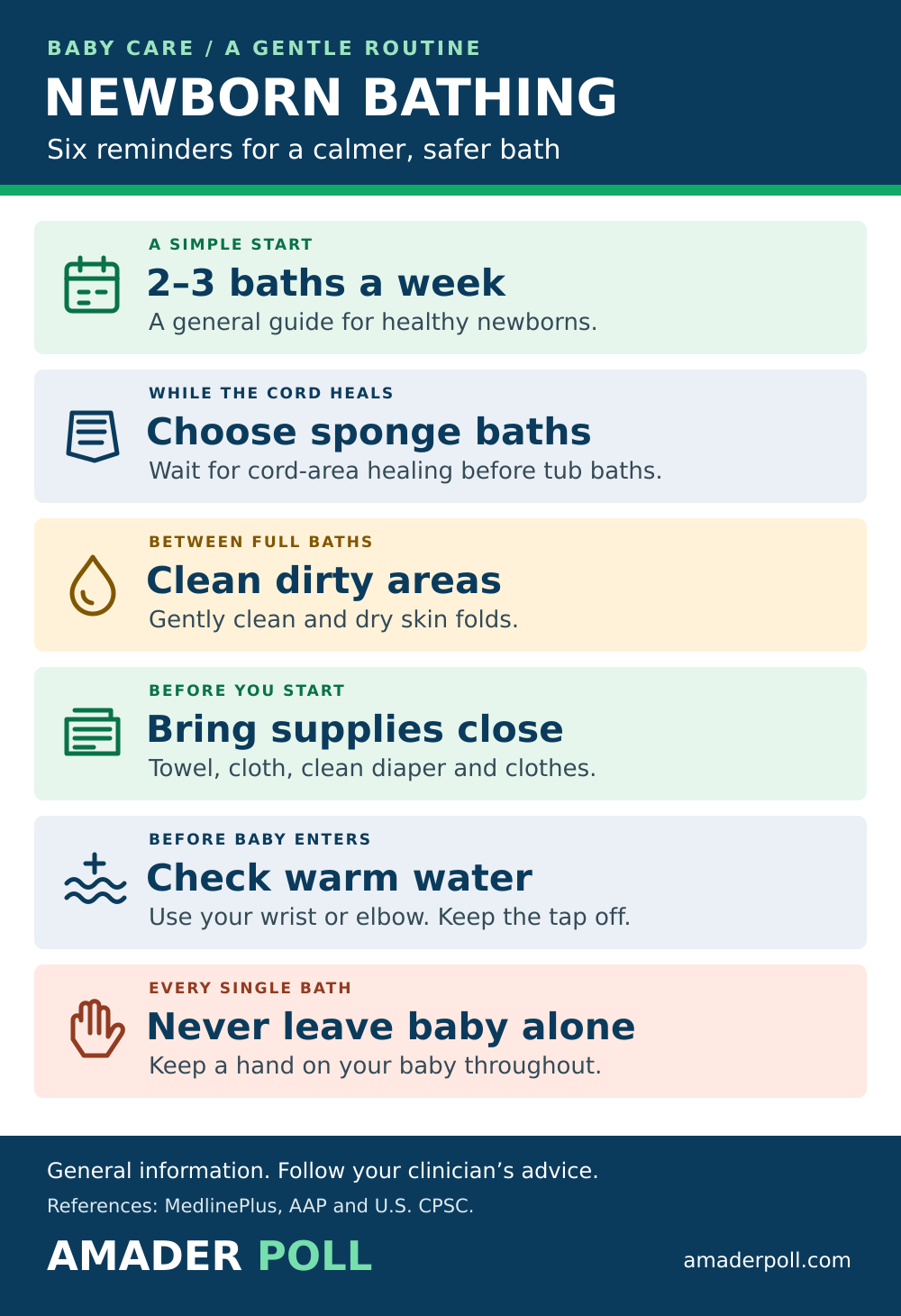
The question “bath newborn how often” has a reassuring answer: a newborn usually does not need a full bath every day, and around two or three baths a week is generally enough (MedlinePlus bathing guidance). That leaves room for a simple routine rather than another daily task to fit around feeding, diaper changes, and rest.
The important distinction is between a full bath and cleaning dirty areas: your baby still needs careful diaper-area cleaning and attention to milk or spit-up in skin folds between baths (AAP newborn bathing advice). This guide explains the difference, shows how to prepare, and highlights when your own clinician’s instructions should take priority.
The quick answer
For most healthy newborns, plan around two or three baths weekly, use sponge baths while the cord stump remains, and keep an adult’s hand on the baby throughout bathing (MedlinePlus bathing guidance; AAP bathing advice). Treat that frequency as a starting point, not a quota; ask your baby’s clinician for an individual routine if there are health or skin concerns.
bath newborn how often: building a weekly routine
MedlinePlus suggests bathing a newborn every three days, while the American Academy of Pediatrics says three baths a week may be enough during the first year (MedlinePlus; AAP). These are compatible starting points rather than instructions to bathe on particular weekdays.
You might pencil in Monday and Thursday, then leave another day available if a bath is needed. Use that example as a planning aid, not a medical schedule, and write any discharge instructions beside it.
Before each planned bath, separate three questions: is your baby ready for immersion, is a full wash actually needed, and can you give the task your full attention? Keep the answer practical; if your supplies are scattered or you cannot concentrate, organise a better moment instead of trying to complete a calendar reminder at any cost.
| Situation | Practical approach | What matters most |
|---|---|---|
| Healthy newborn at home | About two or three baths weekly (MedlinePlus) | Avoid treating a daily bath as necessary. |
| Cord stump still attached | Sponge bathing rather than soaking (MedlinePlus cord care) | Keep the stump clean and dry. |
| Milk, spit-up, or a dirty diaper | Gently clean the affected area (AAP) | Check folds and dry them carefully. |
| Medical or skin concerns | Ask the baby’s clinician about the routine (MedlinePlus) | Individual advice comes before this guide. |
Before tub baths: first baths and cord care
For the first bath after birth, the AAP describes the World Health Organization recommendation to wait at least 24 hours where possible, with exceptions needing advice from the maternity team (AAP first-bath guidance). Do not use an online timetable to overrule the care plan you receive before leaving hospital.
At home, give sponge baths until the umbilical stump falls off, and wait until the belly-button area has healed before starting immersion baths (MedlinePlus cord care; AAP bathing advice). The switch is about healing, not simply reaching a certain birthday.
Let the stump separate on its own rather than pulling it, and ask your clinician about redness, swelling, tenderness, or foul-smelling drainage around it (MedlinePlus cord care). If you are unsure whether the area is ready for a tub bath, choose a sponge bath while you seek advice.

Keeping your baby clean between full baths
Between baths, pay attention to the face, neck folds, behind the ears, underarms, and diaper area; the AAP recommends gentle cleaning and particular care around skin creases (AAP sponge-bath guidance). Make a small washcloth-and-towel kit so you can clean a local mess without setting up the entire bath.
During a sponge bath, keep the baby wrapped in a dry towel and uncover only the area you are washing, then dry carefully before moving on (AAP). Work methodically instead of trying to finish everything in one hurried wipe.
Use a soft cloth rather than scrubbing, and use mild cleanser sparingly only when needed for dirty areas (AAP skin-cleaning advice). Ask the clinician caring for your baby before changing an existing skin-care plan.
For example, if you notice milk in a neck crease after a feed, focus on cleaning and drying that spot rather than automatically bringing forward the next full bath. This follows the AAP’s distinction between regular attention to dirty areas and less frequent whole-body bathing (AAP).
How to make bath time simpler and safer
Prepare everything before you begin
Put a towel, soft washcloth, fresh diaper, clean clothes, and any needed mild cleanser within reach before undressing your baby (AAP preparation advice). Do a final check yourself rather than assuming another caregiver has already brought the towel.
Use a flat, secure surface for sponge bathing, padding hard surfaces and keeping a hand on your baby if the surface is above floor level (AAP sponge-bath safety). Choose the arrangement that lets you work steadily without stretching across the room.
Check water before your baby enters
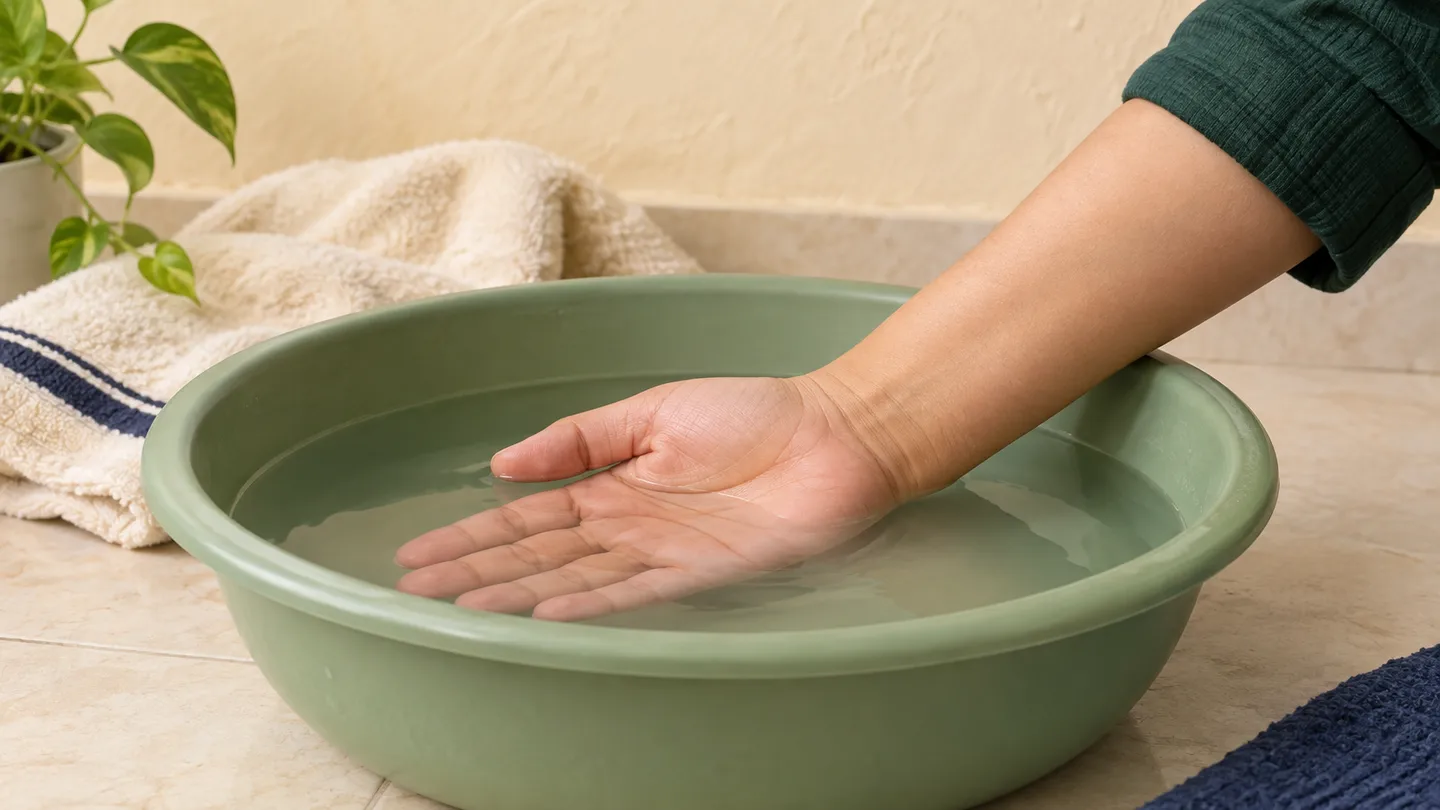
Fill the basin before putting the baby in, keep the faucet off, and check that the water feels warm rather than hot against your inner wrist or elbow (AAP water-safety advice). Keep this preparation separate from the moment you are lifting and supporting your baby.
The AAP describes starting with about two inches of water, while also warning that babies must never be left alone in the bath (AAP). Shallow water is not permission to step away, even to collect something from a nearby shelf.
Support your baby and wash gently
Once the cord area has healed and tub bathing is appropriate, support the head and neck while lowering your baby feet first, keeping the face above water and maintaining touch supervision (AAP tub-bathing instructions). If you feel unsure about the hold, ask a nurse or other qualified professional to demonstrate it.
Wash the face gently with a soft cloth and continue down the body, giving skin folds careful attention and leaving the diaper area until last (AAP cleaning sequence). Think of the process as a series of calm, small movements rather than a long soak.
Dry, dress, and empty the bath
Wrap your baby promptly in a towel and gently pat the skin dry, keeping the head and body warm (AAP after-bath care). Having the diaper and clothing already arranged makes this final stage easier to manage.
Once your baby is safely settled with a responsible caregiver or in an appropriate safe place, empty the bath water immediately after use (CPSC drowning-prevention guidance). Put emptying the basin on the same mental checklist as washing, rather than leaving it as a separate household job.

What equipment is actually useful?
Start by checking what you already own against a short list: a suitable infant tub or sponge-bath setup, soft cloths, a towel, clean clothes, and diapers (AAP bathing supplies). There is no need to turn this guide into a large shopping order; organise the basics before deciding whether any extra item would genuinely help.
Choose bathing equipment according to the manufacturer’s instructions and your baby’s suitability requirements, and never treat an upright bath seat as a substitute for supervision (AAP equipment advice; CPSC safety guidance). Ask practical questions about setup, cleaning, storage, and whether you can keep supplies close while supporting your baby.
For broader product research, visit our Baby category. Our Editorial Policy explains how we distinguish research from direct experience; this article is a care-information guide, not a hands-on bathtub review or a medical consultation.
Keep buying decisions separate from safety promises. A convenient tub shape, an attractive towel, or a clever storage basket might fit your preferences, but no accessory removes the need for continuous adult supervision (CPSC). Compare what an item genuinely does with what its advertising merely suggests before adding it to your list.
Sharing the routine with another caregiver
Write a brief bath plan that both adults can understand: where the supplies live, whether the cord area has healed, which cleaning products are already in use, and any instructions from your clinician. Keep it beside your household care notes, and update it when professional advice changes rather than relying on a conversation remembered differently.
Before handing over, explain what has already been done and what still needs doing. Ask the other adult to confirm the plan, especially if you are switching from a sponge bath to a first tub bath.
Agree on who is responsible before the bath starts, and make any handover explicit rather than assuming another person has taken over; the CPSC warns against leaving babies alone or under the supervision of young siblings in the bathtub (CPSC). A shared checklist should support attention, never replace it.
Common mistakes worth avoiding
Daily full bathing is not necessary for most newborns, and bathing too frequently can dry their skin, particularly when soap is used (AAP bathing-frequency advice). Review the whole routine rather than adding another bath whenever you notice a small mess.
Avoid running water over your baby during the bath because tap-water temperature can change, and do not rely on a bath seat or another young child to provide supervision (AAP water safety; CPSC). If the phone rings or the door needs answering, let it wait or take your baby with you.
Never leave a baby alone near bath water, even briefly, because drowning can happen quickly and silently (CPSC drowning prevention). Make an explicit handover between adults, so “I thought you were watching” is never part of the plan.
When to ask for medical help
Contact your baby’s clinician promptly about increasing redness, swelling, tenderness, or foul-smelling yellow drainage around the cord stump, and seek immediate advice about continuing bleeding (MedlinePlus cord-care warning signs). Do not try to solve a possible cord infection by bathing more often.
A newborn with a temperature of 100.4°F (38°C) or higher, poor feeding, unusual lethargy, or a floppy appearance needs immediate medical advice (MedlinePlus). Do not delay getting help while waiting for the next bath or trying a different cleanser.
For persistent dryness, a rash, prematurity, recent procedures, or uncertainty about bathing safely, ask the clinician responsible for your baby’s care for a specific plan (MedlinePlus bathing guidance). Keep the instructions somewhere both parents and other caregivers can find them.
Frequently asked questions
Does a newborn need a bath every day?
Usually not: around two or three baths a week is generally enough, alongside cleaning dirty areas between baths (MedlinePlus; AAP).
Can I bathe my baby before the cord falls off?
Use sponge baths while the stump remains attached, and wait for the cord area to heal before immersion bathing (MedlinePlus cord care; AAP).
Is missing a planned bath a problem?
Because daily full baths are not usually necessary, a missed planned bath can generally be rearranged while you continue cleaning dirty areas (AAP bathing guidance).
How often should I wash newborn hair?
The AAP suggests washing a baby’s hair two or three times a week with a mild shampoo or body wash (AAP hair-care advice).
Do I need soap for every bath?
Use soap sparingly; if cleanser is needed for heavily soiled areas, choose a mild product without additives and rinse it away promptly (AAP cleanser guidance).
Is a bath seat enough to keep my baby safe?
No: a bath seat does not replace adult supervision, and a baby should never be left alone or supervised only by young siblings in a bathtub (CPSC).
The bottom line
For parents asking “bath newborn how often,” a useful starting point is two or three baths weekly, sponge bathing until cord healing allows immersion, and gentle cleaning wherever needed between baths (MedlinePlus; AAP). Keep your own clinician’s instructions ahead of any sample schedule.
Aim for a manageable routine rather than a perfect calendar. Prepare first, stay focused on your baby, and use our Contact page if you notice an article error or want to suggest a future guide; medical questions belong with your baby’s healthcare professional.