do baths help newborns sleep? What to expect
A warm bath is often pictured as a bedtime step, but newborn evenings rarely follow a perfect sequence. If your question is “do baths help newborns sleep,” it helps to separate a familiar wind-down cue from a promise of longer sleep. The bathing guidance cited here covers newborn bathing and safety, not evidence that baths extend sleep.
A bath can be an optional part of a calm routine if your baby tolerates it and you can supervise closely. It is not a nightly requirement, and skipping it does not leave bedtime incomplete. Below, you’ll find a practical way to choose between bath and bath-free evenings, along with bathing and safe-sleep basics.
do baths help newborns sleep longer?
A repeated evening sequence can give caregivers a familiar way to move from daytime activity toward quieter care. A bath might be one of those steps, followed by a diaper change, a feed when needed, and a quiet song or cuddle. But a routine cue and a change in how long a newborn sleeps are different things; the cited newborn-bathing guidance does not establish that bathing makes babies sleep longer. HealthyChildren.org’s newborn bathing guidance
That distinction can make the decision easier. If your baby seems comfortable in the water and the setup is safe, you can include a brief bath when it suits the evening. If the baby is tired, hungry, upset, or unsettled by bathing, skip it and tend to the immediate need. A bath should not delay a feed or become a task you feel obliged to complete before putting your baby down.
For example, a baby who is calmly alert might have a short bath before getting dressed for sleep. On another evening, the same baby might need a diaper change and a feed right away, leaving no good reason to add water time. Neither version proves anything about the baby’s future sleep; the useful question is whether the step fits your family comfortably that night.
If your newborn wakes soon after being put down, adding a bath the next evening is not an evidence-based fix. Newborns need care at different times, and a routine cannot replace feeding, comfort, or other care your baby needs. Keep the bath when it is pleasant and practical; leave it out when it makes the evening harder.
Build a routine that can change with the evening
A useful wind-down routine is a short, recognizable order of calm activities, not a strict schedule that must be completed exactly. You might dim the room, change the diaper, feed your baby when needed, and then sing or speak softly before placing the baby in the sleep space. A bath may come before those steps, but the routine still works without one.
Choose a version that is realistic for the people caring for your baby. If one caregiver is handling a late feed alone, for example, a diaper change and quiet cuddle may be more manageable than preparing a bath. If another caregiver has time and the baby is content, a brief bath can fit. The difference is not which version is correct; it is whether the plan respects the baby’s needs and the caregiver’s ability to supervise.
A simple fallback can prevent the bath from feeling like a missed requirement. Decide that a short routine might mean a feed, a clean diaper, and a few quiet minutes together. If a feed runs late or the baby becomes drowsy, use the shorter version rather than waking the baby or rushing through bath time to preserve yesterday’s sequence.
| Evening situation | Possible next step | Practical choice |
|---|---|---|
| Baby is calm | Brief bath, then quiet care | Include it if manageable |
| Baby needs a feed | Feed and comfort first | Do not delay feeding |
| Baby is upset or tired | Skip the bath | Keep the routine short |
| Supplies or supervision are lacking | Choose bath-free care | Try another evening |
A bath-free wind-down is a complete option
A routine without water can still give the evening a familiar shape. For example, change your baby’s diaper, put on comfortable sleep clothing, offer a needed feed, and spend a few quiet minutes holding or singing to them. These are ordinary caregiving steps, not a technique that guarantees a particular sleep result.
Some nights call for only the essentials. A caregiver who has just finished feeding the baby might burp and comfort them, check the diaper, and then move toward the sleep space. If the baby is already settled, there is no need to interrupt that moment for a bath. A short routine can also be easier for caregivers to share because it has fewer supplies and steps to coordinate.
A bath-free plan is especially relevant before the umbilical cord stump falls off. The AAP advises sponge baths until then, which usually takes about one or two weeks. HealthyChildren.org’s newborn bathing guidance Follow the care instructions you received, and use quiet, dry steps if you want a predictable evening sequence during that period.
You can decide based on the evening rather than committing to one routine forever. If the baby is fussy, a caregiver is short on time, or supplies are not ready, go directly to the next calm step. For details on bathing frequency, see our newborn bathing guide. A bath is one possible activity, not a prerequisite for bedtime.
How often newborns need a bath
Newborns do not generally need a full bath every day. The AAP says three baths per week during a baby’s first year may be enough, and that more frequent bathing can dry the skin. HealthyChildren.org’s newborn bathing guidance Between baths, you can clean a small mess as needed without turning every evening into bath night.
The timing of the very first bath is a separate question from whether a bath belongs in a bedtime routine. The World Health Organization recommends delaying a newborn’s first bath for at least 24 hours after birth. WHO’s newborn care guidance This guidance concerns newborn care after birth, not a sleep benefit from bathing later at home.
The AAP describes reasons for delaying that first bath, including helping the baby stay warm and protecting time for early skin-to-skin contact and feeding. HealthyChildren.org’s newborn bathing guidance Once you are home, the practical distinction is simple: bathe when it is appropriate for your baby’s care, not because you expect it to produce longer sleep.
If your baby’s clinician or care team has given you different instructions, follow those for your baby. Individual circumstances can affect how you have been asked to provide care, and general guidance cannot replace that advice. For more related topics, visit our Baby Bath section; for questions about your own baby, ask the health care team.
Keep bath time brief, prepared, and supervised
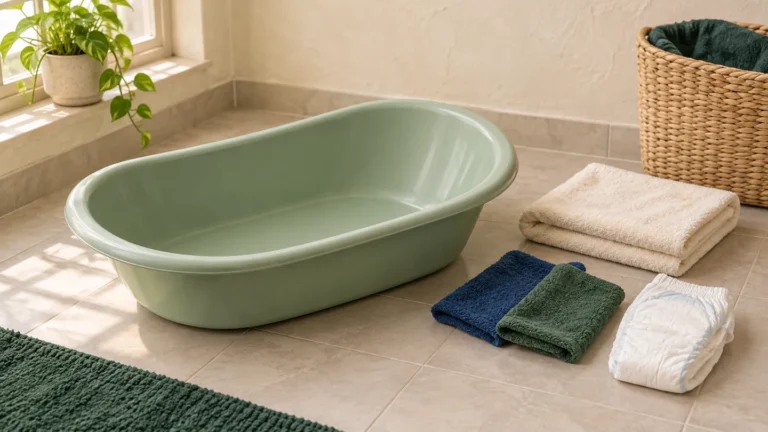
Before bringing your baby to the bath, set out the towel, washcloth, and anything else you need. The AAP advises keeping a hand on your baby throughout bath time and never leaving a baby alone in bath water, even for a moment. HealthyChildren.org’s newborn bathing guidance If you need to answer the door or get a forgotten item, take the baby with you.
Check that the water feels warm, not hot, on the inside of your wrist or elbow. The AAP advises against bathing a baby in running water and recommends turning off the faucet before placing the baby in standing water, because water temperature can change as it moves through household pipes. HealthyChildren.org’s newborn bathing guidance Prepare the water first, then keep your attention on your baby.
Keep a regular bath gentle and brief. If your baby protests or becomes distressed, stop and try again another time; the AAP says families can return to sponge baths for a week or two before trying a regular bath again. HealthyChildren.org’s newborn bathing guidance No established sleep benefit makes it necessary to push through an upsetting bath.
Think about the whole setup before choosing bath time. If you are alone without supplies within reach, or too tired to stay focused on supervision, use the bath-free routine instead. A calm evening does not require putting your baby in water, and the bath should happen only when you can give it your full attention.
After the routine, use safe-sleep basics
After a bath or a bath-free routine, place your baby on their back for every sleep. Use a firm, flat sleep surface such as a crib, bassinet, or play yard that meets safety standards, with only a fitted sheet in the sleep space. HealthyChildren.org’s safe-sleep guidance A sleepy-looking baby still needs the same safe setup.
A calming routine should not change where your baby sleeps. If a baby falls asleep in a car seat, stroller, swing, carrier, or sling, the AAP advises moving them to a firm sleep surface on their back as soon as possible. HealthyChildren.org’s safe-sleep guidance If your baby dozes while you hold them after a bath, place them in their own sleep space before you go to sleep.
Room-sharing means keeping your baby’s sleep space in the same room as you, close to your bed but separate. The AAP recommends room-sharing for at least the first six months and advises against bed-sharing. HealthyChildren.org’s safe-sleep guidance For example, you can feed or comfort your baby nearby and then return them to their own sleep space.
Whether the evening included a bath, a feed, or a cuddle, the sleep setup stays the same: back position, firm and flat surface, and a clear separate space. A routine is useful only when it fits around your baby’s needs and safe-sleep practices. The bath can be part of winding down, but it does not replace them.
Frequently asked questions
Should I bathe my newborn every night?
No. The AAP says three baths per week during the first year may be enough, and more frequent bathing can dry the skin. HealthyChildren.org’s newborn bathing guidance
Can I skip the bath if my baby is tired?
Yes. Use a shorter, quiet routine and respond to your baby’s needs rather than preserving a bath schedule.
Can I give my baby a regular bath before the cord stump falls off?
The AAP advises sponge baths until the stump falls off. Follow any individual care instructions you received. HealthyChildren.org’s newborn bathing guidance
Does a warm bath make newborns sleep longer?
The guidance cited here does not establish that baths lengthen newborn sleep. A bath can be an optional wind-down cue without an expectation of longer sleep.
What if my baby falls asleep after a bath?
Place your baby on their back in a firm, flat, separate sleep space. HealthyChildren.org’s safe-sleep guidance
What is a simple bath-free routine?
Try a diaper change, a needed feed, and a quiet cuddle or song before placing your baby in their safe sleep space.
The bottom line
A bath can be a familiar wind-down cue, but the available guidance does not show that do baths help newborns sleep longer. Keep it if your baby tolerates it and it fits your evening; skip it when your baby needs something else or the bath adds stress.
Newborns do not need a full bath every night, and a bath-free routine is a complete option. Keep bath time supervised and gentle, follow individual care instructions, and place your baby on their back in a firm, flat, clear sleep space for every sleep.