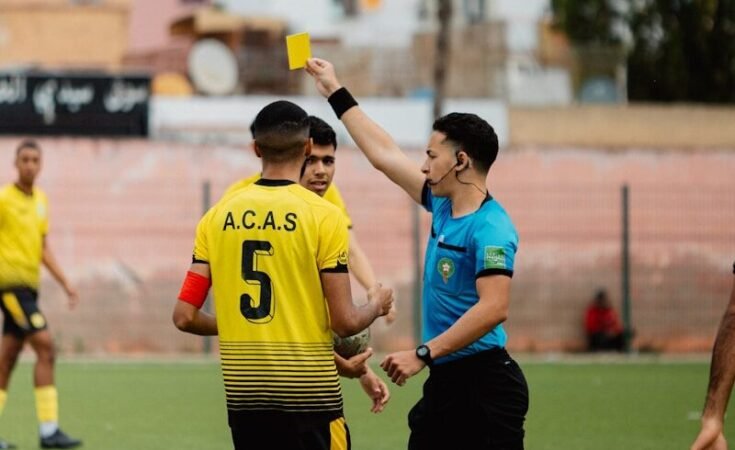
Few moments in sport ignite passions quite like a controversial referee decision in the latest international match. Whether it is a disputed penalty, a contentious red card, an offside that splits opinion, or a last-minute call that decides the fate of a tournament, the refereeing controversy is one of sport’s most reliable and emotionally charged narratives. In 2026, as technology continues to reshape officiating and the stakes of international football reach ever greater heights, the debate over referee fairness has never been more intense — or more consequential.
This article examines the anatomy of refereeing controversies, the arguments on all sides of the debate, the role of technology in modern officiating, and why the question of fairness in sport is about much more than a single match.
The Incident That Has Everyone Talking
What Happened
International football in 2026 has been defined by a series of high-stakes matches across the FIFA World Cup qualifiers, the UEFA Nations League, and the AFC Champions League — each producing its share of disputed officiating moments. The decision that sparked the most recent firestorm came in a critical World Cup qualifier, where a late-match penalty was awarded under circumstances that left players, coaches, and millions of fans deeply divided.
In the closing minutes of a decisive qualifier, a collision inside the penalty area — part accidental, part contact-driven — resulted in a spot kick being awarded. The attacking player went down; the defending player insists minimal contact was made. The referee, after a brief consultation with the VAR team, pointed to the penalty spot. The match result — and with it, potential World Cup qualification — hung on that single decision.
The Reactions

The reaction was immediate and global. Social media erupted. Former players and current coaches took polarised positions in press conferences and television studios. Sports analysts dissected the replay from every conceivable angle. The decision split opinion not only between the two sets of supporters but among neutral observers, officiating experts, and even within the refereeing community itself.
Understanding the Laws of the Game
What Constitutes a Foul and a Penalty
To evaluate any referee decision in the latest international match fairly, it is essential to understand the relevant laws. According to the Laws of the Game as administered by the International Football Association Board (IFAB), a direct free kick is awarded when a player commits any of the following against an opponent in a manner considered careless, reckless, or using excessive force: charging, jumping at, kicking, pushing, striking, tackling, or tripping.
The critical word is “careless” — defined as when a player shows a lack of attention or consideration when making a challenge. This is inherently subjective. Referees must make real-time judgments on whether contact was careless, whether it influenced the opponent’s movement, and whether a fall was genuinely caused by the contact or simulated.
The Role of Intent
One of the most contested aspects of modern officiating is the role of intent. Strict reading of the Laws of the Game suggests that intent is largely irrelevant — if the contact is careless and causes the opponent to fall, a foul may be awarded regardless of the defending player’s intention. In practice, however, referees frequently factor in apparent intent when determining whether contact rises to the level of a foul.
This creates inconsistency. The same tackle, the same contact, the same outcome can be judged differently by different referees, or even by the same referee on a different day, depending on context, game management instincts, and the referee’s reading of the match situation.
The VAR Debate: Technology Helping or Hurting?

What VAR Was Designed to Do
The Video Assistant Referee system was introduced to football with a straightforward mandate: to correct clear and obvious errors on four specific categories of decision — goals, penalty decisions, direct red card incidents, and cases of mistaken identity. The key phrase is “clear and obvious” — VAR was never intended to achieve perfection, only to prevent the most egregious errors.
In the incident in question, the VAR team reviewed the footage and upheld the on-field decision — meaning they did not find sufficient grounds to overturn it as a clear and obvious error.
The Problem with “Clear and Obvious”
The ambiguity of “clear and obvious” is itself one of the most significant criticisms of the VAR system. If the footage is ambiguous, VAR tends to uphold the original decision by default, on the basis that the error is not “clear and obvious” enough to override.
This creates a situation where a wrong decision can survive VAR review simply because it is not wrong enough. Critics argue this is the worst of all worlds: technology is applied, the game is stopped, drama ensues — and the wrong call is confirmed anyway.
Arguments in Favour of VAR
Supporters of VAR point to the genuine errors it has eliminated: goals that would previously have stood despite clear offside or handball violations; penalties awarded or denied on the basis of simulation that can now be reviewed in slow motion; red cards given to the wrong player corrected before the match resumes.
The Human Element: Referees Under Impossible Pressure

The Hardest Job in Sport
Refereeing an international football match is, by any objective measure, one of the most demanding tasks in sport. Elite referees must make hundreds of judgments per match, in real time, under intense pressure, in environments where thousands of spectators — and millions more television viewers — will scrutinise every call.
The physical demands alone are staggering: elite referees run between 10 and 13 kilometres per match and must maintain concentration across 90-plus minutes of high-intensity action. The psychological demands — managing elite athletes who are competitive, emotional, and often intent on influencing decisions — are equally formidable.
The Problem of Bias (Conscious and Unconscious)
Research in sports psychology and behavioural economics has documented the presence of various cognitive biases in refereeing decisions. Home advantage — the documented tendency for referees to award more decisions in favour of home teams — is one of the most robustly established findings in sports science, believed to be driven primarily by crowd noise influencing unconscious referee judgment.
Fair or Unfair? The Arguments on Each Side
The Case That the Decision Was Fair
Those who defend the penalty decision argue that contact was made, that the defender’s body position was careless, and that the forward’s movement was directly affected by the challenge. Under the Laws of the Game, the referee had sufficient grounds to award the penalty. VAR confirmed it. The decision stands on its merits.
They further argue that expecting refereeing perfection is both unrealistic and unfair. Every team in every tournament benefits from some favourable calls and is disadvantaged by others. Over the course of a competition, these things tend to even out.
The Case That the Decision Was Unfair
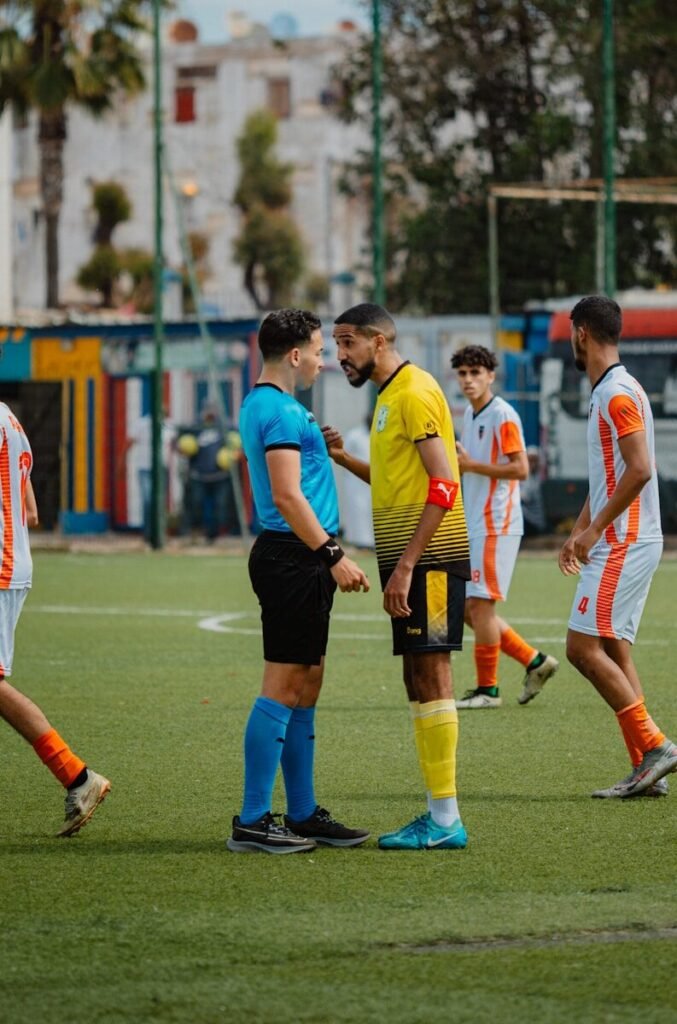
Those who contest the decision argue that the contact was minimal — initiated as much by the forward as by the defender — and that the fall was embellished. They point to VAR’s confirmation as evidence not of correctness but of the system’s limitations: it can only correct “clear and obvious” errors, and in a close call, the technology provides false reassurance rather than genuine justice.
What Needs to Change in International Officiating
Greater Transparency in VAR Communication
One consistently demanded reform is greater transparency in VAR communications. Fans watching in stadiums often have no idea why a VAR review is taking place or what the ultimate rationale for a decision was. Broadcasting the referee’s audio explanation — as is now practised in rugby union — would significantly improve public understanding and acceptance of decisions.
Standardised Training and Assessment
FIFA and the relevant continental confederations must invest more heavily in standardised referee training and consistent performance assessment. The current system, in which referee quality varies significantly across confederations, undermines the principle of equal standards across international competition.
Conclusion
The debate over the referee decision in the latest international match is about far more than a single penalty, a single match, or a single referee. It touches on fundamental questions about fairness, human judgment, technological limitations, and the nature of sport itself. Football will never be perfectly officiated — it is a fast, complex, physical game played by human beings and managed by human beings. But the conversation about how to make officiating fairer, more transparent, and more consistent is one that the football community must continue to have with rigour and good faith. Was the decision fair? You have the evidence — now you decide.
External Reference: Football Australia — footballaustralia.com.au