how to socialize a puppy before fully vaccinate
A puppy’s early experiences can shape how comfortable they become around people, animals, sounds, surfaces, and everyday routines. Yet young puppies are still in the middle of their vaccine series, so owners have to balance useful, gentle exposure with sensible steps to limit contact with infectious disease.
This guide explains how to socialize a puppy before fully vaccinate without treating every outing as equally safe. The aim is not to keep a puppy isolated or to take it everywhere, but to offer calm, controlled experiences while checking with your veterinarian about local risks and your puppy’s individual situation.
Why the early socialization window matters
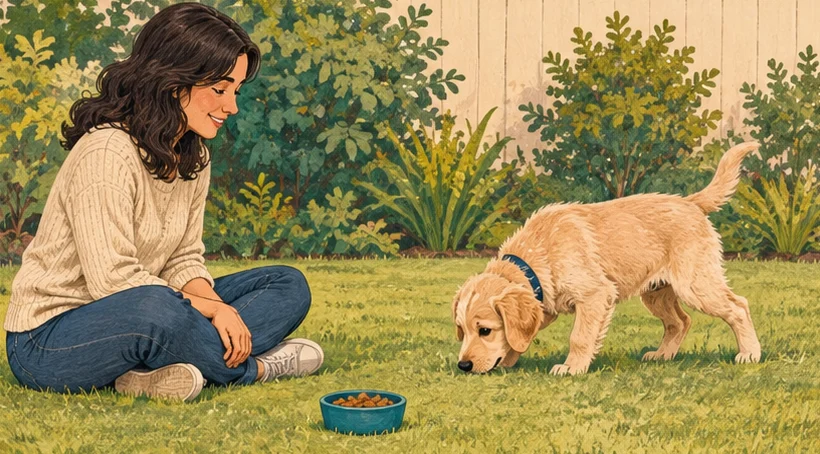
The first three months are an especially important period for puppy socialization, according to the American Veterinary Society of Animal Behavior (AVSAB). That means a puppy can benefit from safe exposure before the vaccine series is complete, rather than waiting for a single “fully vaccinated” milestone to begin all new experiences. AVSAB puppy socialization position statement
Socialization does not mean making a puppy greet every person or dog. It means helping the puppy notice unfamiliar things without being overwhelmed, and allowing it to approach, observe, or move away. For example, a puppy might watch a bicyclist pass from a comfortable distance, then receive a treat for remaining relaxed; the goal is a neutral or pleasant impression, not forced interaction.
A puppy that has few positive experiences may find ordinary situations harder later, while too much intensity can also create fear. AVSAB advises exposing puppies to new people, animals, stimuli, and environments as safely as possible, without over-stimulation that shows up as fear, withdrawal, or avoidance. AVSAB puppy socialization position statement
The practical distinction is between thoughtful exposure and exposure for its own sake. A short visit to a quiet porch to hear distant traffic can be more useful than a crowded event where the puppy cannot retreat. Keep sessions brief enough that the puppy can take food, explore at its own pace, and settle afterward; end early if it starts avoiding the experience.
how to socialize a puppy before fully vaccinate: choose controlled settings
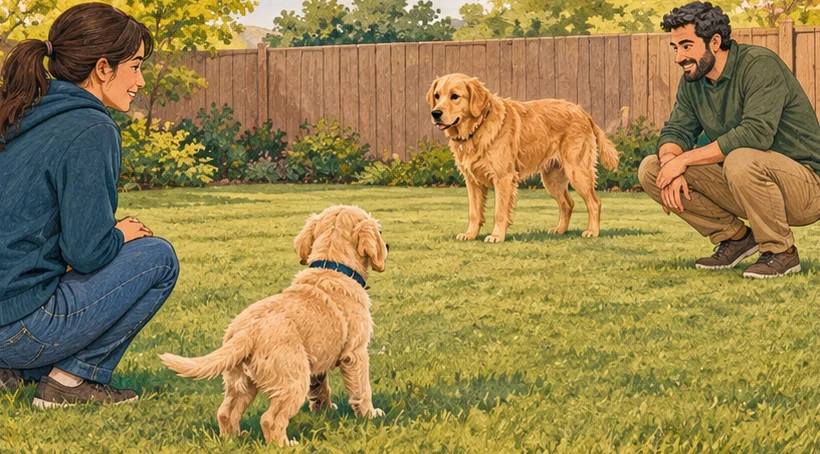
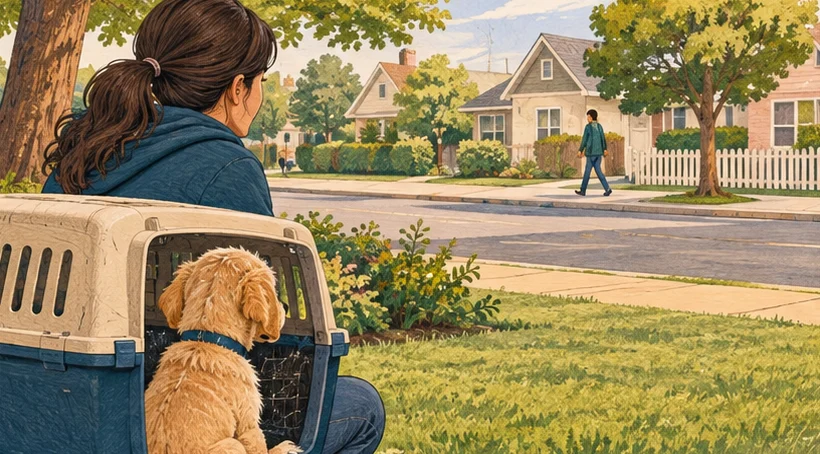
Start with places where you can manage who and what comes close. At home, invite one calm visitor at a time, let the puppy choose whether to approach, and ask the visitor to avoid leaning over or reaching suddenly. A puppy can also observe the street from inside a carrier, a clean blanket, or another secure spot without walking on a public surface.
For a first meeting with another dog, choose a healthy, appropriately vaccinated dog you know and whose temperament is calm around puppies. Meet in a private, clean setting, with enough room for both dogs to disengage; do not insist on play. If either dog becomes tense, overly excited, or persistent, calmly create more distance and try a shorter interaction another day.
Avoid dog parks and other places that are highly trafficked by dogs of unknown health or vaccination status, as well as surfaces that are not sanitized. AVSAB specifically cautions against these settings for puppies who are not fully vaccinated. AVSAB puppy socialization position statement
A walk in a busy public dog area and a carried look at a quiet outdoor market are not equivalent choices. In the second example, the puppy can experience voices, movement, and unfamiliar sights while staying off the ground and at a distance from dogs. Ask your veterinarian which locations and surfaces to avoid locally, because the safest plan depends on disease risk in your area.
Make puppy classes a planned choice, not a guess
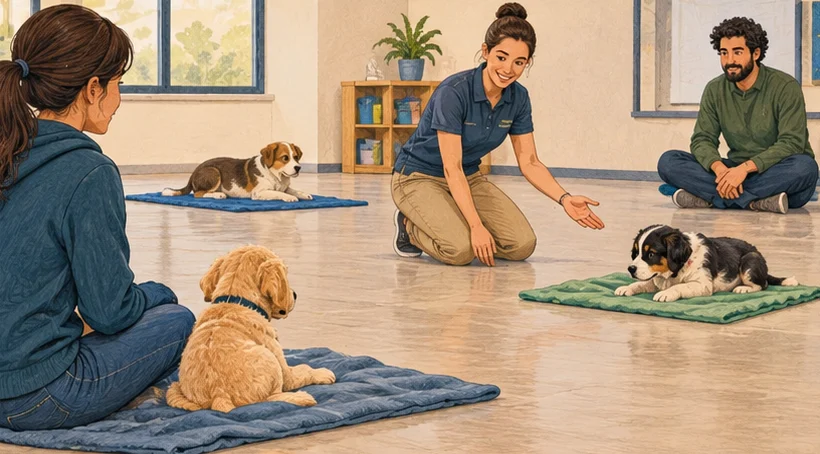
A well-managed puppy class can provide structured exposure, but the setting and entry rules matter. AVSAB says puppies can generally begin classes at 7 to 8 weeks, with at least one set of vaccines given at least seven days before the first class and a first deworming; puppies should remain current on vaccines during class. AVSAB puppy socialization position statement
Before enrolling, ask the instructor how they check vaccination and health status, whether sick puppies are excluded, how the floor is cleaned, and how many puppies attend. AVSAB recommends disease- and parasite-free puppies with up-to-date vaccinations and, where possible, easily cleaned and disinfected class surfaces. AVSAB puppy socialization position statement
A class is a poor fit if puppies are pushed into greetings, cannot take breaks, or are allowed to crowd a frightened classmate. Look for a small, organized environment where the instructor can create space and owners can keep puppies at a comfortable distance. The American Veterinary Medical Association has also summarized the recommendation that puppies show no signs of illness and stay current on vaccines while attending. AVMA overview of early puppy socialization
If your veterinarian advises against a particular class or public location, ask what lower-risk alternatives are appropriate rather than abandoning socialization. A private lesson, a visit to a controlled indoor space, or brief observation from a carried position may offer useful experiences. Whether any one option is suitable depends on your puppy’s health, vaccine history, and local conditions.
Build a simple exposure plan
A plan makes it easier to provide variety without turning a puppy’s day into a stream of unfamiliar demands. Pick one or two manageable experiences, such as hearing a vacuum from another room or meeting a calm adult visitor, and pair them with treats, play, or quiet praise. Repeat at an easy level before making the experience closer, louder, or longer.
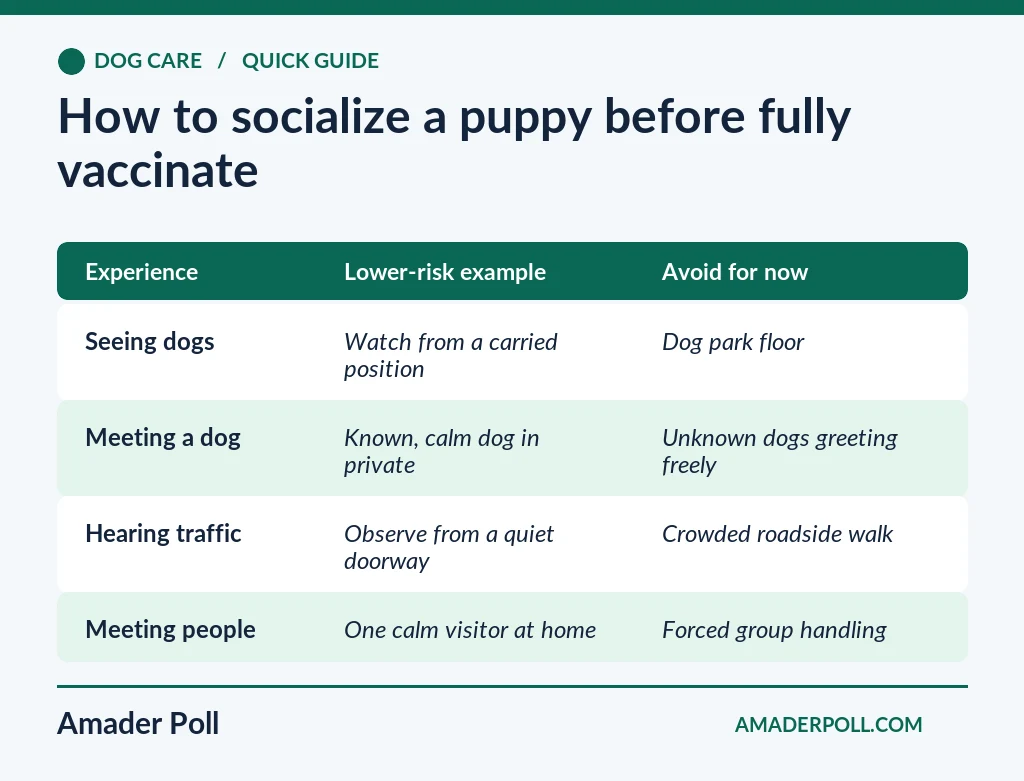
The table offers examples of how to distinguish a controlled exposure from a setting to avoid. These are general examples, not a substitute for your veterinarian’s guidance about local disease risks or your puppy’s individual needs.
| Experience | Lower-risk example | Avoid for now |
|---|---|---|
| Seeing dogs | Watch from a carried position | Dog park floor |
| Meeting a dog | Known, calm dog in private | Unknown dogs greeting freely |
| Hearing traffic | Observe from a quiet doorway | Crowded roadside walk |
| Meeting people | One calm visitor at home | Forced group handling |
For each experience, decide where the puppy can rest and how you will leave if it becomes uncomfortable. Bring treats and use a secure carrier or clean mat when helpful; do not place the puppy on a surface simply because it is convenient. If a visitor arrives while the puppy is napping or already unsettled, postponing the greeting is a useful choice, not a missed opportunity.
Keep a brief note of what the puppy saw and how it responded. For example, if it watched a delivery cart from across the driveway and then took a treat, you can repeat at a similar distance before moving closer. If it hid or would not engage, make the next exposure easier rather than trying to “get it used to” the same intense situation.
Let the puppy set the pace
Choice is central to a positive social experience. Give the puppy room to approach and retreat, and avoid holding it still for a person or dog to touch. If a puppy walks away from a visitor, the visitor can ignore it and let the puppy decide whether to return; that interaction still provides practice being near a new person.
Watch for changes in behavior rather than relying on a single sign. Turning away, retreating, hiding, or becoming unusually still can mean the experience is too much, while relaxed exploration and willingness to take a treat may suggest the puppy is coping. These are practical observations, not a diagnosis; when you are unsure, increase distance and keep the situation calm.
Use rewards to make new experiences pleasant. AVSAB recommends positive reinforcement, such as rewards, praise, petting, play, or treats, for classes and home training. AVSAB puppy socialization position statement In practice, a puppy can receive a small treat for calmly hearing a doorbell, then take a break in a pen or another comfortable space.
Do not punish a puppy for barking, backing away, or showing uncertainty, and do not lure it closer than it is ready to go. If it cannot settle, end the session and offer rest, water, and a familiar activity. Socialization includes learning that new things can be observed safely and that the puppy can count on you to create space.
Coordinate with your veterinarian and local guidance
Vaccination recommendations are not identical for every dog. AAHA distinguishes core vaccines, recommended for all dogs unless there is a medical reason not to vaccinate, from noncore vaccines that depend on factors such as lifestyle, geography, and exposure risk. AAHA canine vaccination recommendations This is why your veterinarian’s advice about outings should reflect your puppy’s records and local circumstances.
At a visit, ask which experiences are appropriate now, whether a particular class meets the practice’s safety expectations, and what local places or surfaces to avoid. Tell the clinic about your puppy’s age, vaccine history, recent illness or exposure, and the settings you hope to visit. The veterinarian can help separate broad socialization goals from specific activities that may carry more risk in your area.
Keep scheduled vaccinations and follow-up care on track while you socialize. AAHA describes its vaccine guidance as general recommendations that veterinarians apply to individual patient needs, and notes that location and exposure can affect vaccine choices. AAHA canine vaccination recommendations That supports a practical approach: do not delay preventive care, but do not assume every puppy needs the same exposure rules.
If your puppy seems ill, has had a possible infectious exposure, or your veterinarian has given a specific restriction, pause group activities and contact the clinic for individual advice. For routine planning, you can still work on safe home experiences, gentle handling, household sounds, and calm observation from a secure place. For more pet-care guidance, visit Amader Poll’s Pet category; our Editorial Policy explains how we approach published guidance.
Frequently asked questions
Can my puppy meet people before the vaccine series is complete?
Yes, controlled meetings with calm visitors can be part of socialization. Let the puppy choose whether to approach and avoid crowded settings or forced handling.
Can an under-vaccinated puppy attend a class?
Some puppies can attend a carefully managed class before the series is complete. Ask your veterinarian and confirm the class’s vaccine, health, cleaning, and break policies first.
Should I carry my puppy in public?
Carrying can let a puppy observe people, sounds, and movement without walking on a public surface. Choose a calm location and keep enough distance for the puppy to relax.
Is it safe to visit a dog park briefly?
Avoid dog parks and other highly trafficked places where dogs’ health or vaccination status is unknown. Choose controlled settings instead.
What if my puppy is nervous around a visitor?
Give the puppy more space and let it watch without being approached. Try a shorter or quieter meeting later rather than forcing contact.
When can I stop planning socialization?
Keep offering suitable new experiences beyond puppyhood, at a pace the dog can manage. Your veterinarian can help you adapt outings as vaccination and local risk considerations change.
The bottom line
how to socialize a puppy before fully vaccinate is a question of balance: offer positive, choice-based experiences during the early socialization period, while avoiding unknown dogs and high-traffic, unsanitized places. A quiet observation, a calm visitor, or a well-run class may be more appropriate than an uncontrolled outing.
Ask your veterinarian to tailor the plan to your puppy’s health, vaccine history, and local disease risks. Keep exposures brief, reward calm curiosity, and give the puppy an easy way to retreat; if it becomes uncomfortable, create space and try a gentler version later.