
dog eating grass symptoms: what to watch for
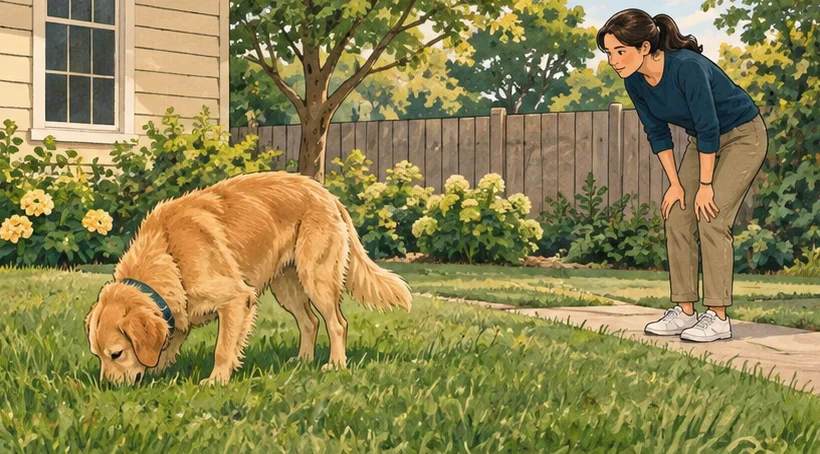
When a dog eats grass, it can be tempting to read the behavior as a sign of nausea or a nutritional problem. But grazing alone does not show that a dog is ill or deficient. To decide what to do, note the dog’s behavior before and after eating grass, whether vomiting occurs, and whether the grass could have been treated with chemicals.
This guide explains dog eating grass symptoms to watch for and offers a practical way to log an episode. A dog that nibbles briefly and carries on normally presents a different situation from one that vomits repeatedly, seems distressed, or may have contacted lawn chemicals. These observations can help you describe the situation when you contact a veterinarian; they cannot identify its cause.
What grass eating alone can tell you
Many dogs eat grass without appearing ill beforehand or vomiting afterward. One veterinary resource reports that fewer than one in four dogs vomit after eating grass, and only 10% show signs of illness before grazing. VCA’s overview of why dogs eat grass Those figures make grass eating a poor stand-alone signal of nausea: look for changes in the dog, not just the blades it ate.
There is no single explanation for every dog. VCA discusses possible influences including instinct, fiber, boredom, and anxiety, while noting that the cause is not always clear. VCA’s overview of why dogs eat grass These are possibilities, not conclusions an owner can draw from one episode. For example, a dog that grazes during a relaxed walk and then behaves normally is showing a different pattern from one that eats urgently and cannot settle.
Timing can be useful to record, but it does not prove cause and effect. A dog may vomit after grazing without having eaten grass to make itself vomit, and grass eating alone does not establish that the dog felt sick first. VCA describes this uncertainty and reports that most grass-eating dogs do not vomit afterward. VCA’s overview of why dogs eat grass Write down what happened in sequence rather than assuming one event caused the other.
dog eating grass symptoms: signs that change the picture
The signs that matter most are what you observe alongside grazing. Note vomiting, unusual tiredness, a painful-looking belly, fever, or a marked change from the dog’s usual behavior. Cornell advises contacting a veterinarian for lethargy, a painful belly, fever, or vomiting lasting more than 24 hours. Cornell University’s guidance on vomiting A dog’s normal behavior after a few bites is a different observation from a dog that seems unwell afterward.
Look at the pattern rather than trying to interpret a single detail. For example, one brief grazing episode followed by normal activity is not the same as several vomiting episodes or an inability to settle. Cornell notes that unresolved vomiting can affect electrolyte balance and lead to dehydration. Cornell University’s guidance on vomiting If vomiting repeats or the dog appears distressed, call a veterinary clinic for guidance instead of treating the grass as an explanation.
The appearance of vomit is also worth describing accurately. Cornell recommends a veterinary appointment if vomit contains blood or material with the consistency of coffee grounds. Cornell University’s guidance on vomiting Do not wait for a pattern of repeated episodes to mention these signs. If you are unsure what you saw, describe it to the clinic rather than trying to label it yourself.
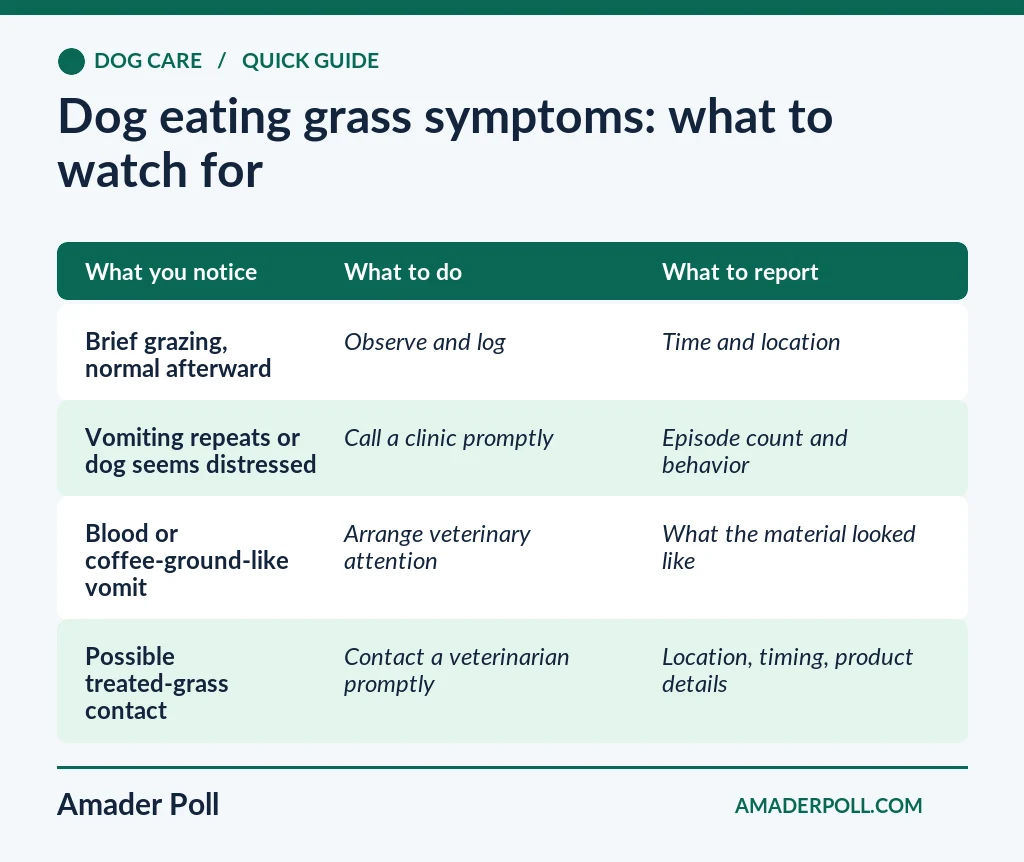
| What you notice | What to do | What to report |
|---|---|---|
| Brief grazing, normal afterward | Observe and log | Time and location |
| Vomiting repeats or dog seems distressed | Call a clinic promptly | Episode count and behavior |
| Blood or coffee-ground-like vomit | Arrange veterinary attention | What the material looked like |
| Possible treated-grass contact | Contact a veterinarian promptly | Location, timing, product details |
When vomiting repeats or the dog seems distressed
An isolated vomit after grazing does not establish that grass caused it. VCA notes that the cause-and-effect relationship is uncertain and that most grass-eating dogs do not vomit afterward. VCA’s overview of why dogs eat grass The useful distinction is whether the episode happened once or repeated, and whether the dog returned to its usual behavior between episodes.
Record the number and timing of episodes, and note whether the dog retched or seemed uncomfortable. Cornell explains that regurgitation occurs without retching and may indicate an esophageal problem, while vomiting involves retching. Cornell University’s guidance on vomiting You do not need to decide which occurred; a plain description of what you saw can help the veterinary team understand the event.
Repeated vomiting or visible distress calls for a prompt call to a veterinary clinic. Share whether the dog is unusually quiet, has a painful-looking belly, or seems unable to settle, and mention any other changes you observed. Cornell also advises contacting a veterinarian for lethargy, fever, a painful belly, or vomiting that lasts more than 24 hours. Cornell University’s guidance on vomiting The clinic can advise how soon the individual dog should be seen.
Blood or coffee-ground-like material in vomit is a reason to arrange a veterinary appointment, whether or not the dog ate grass first. Cornell University’s guidance on vomiting When you call, give the timeline and visible signs without guessing that grazing explains them. That distinction keeps the focus on what the clinic needs to assess, rather than on a presumed cause.
Suspected lawn chemicals need a separate response
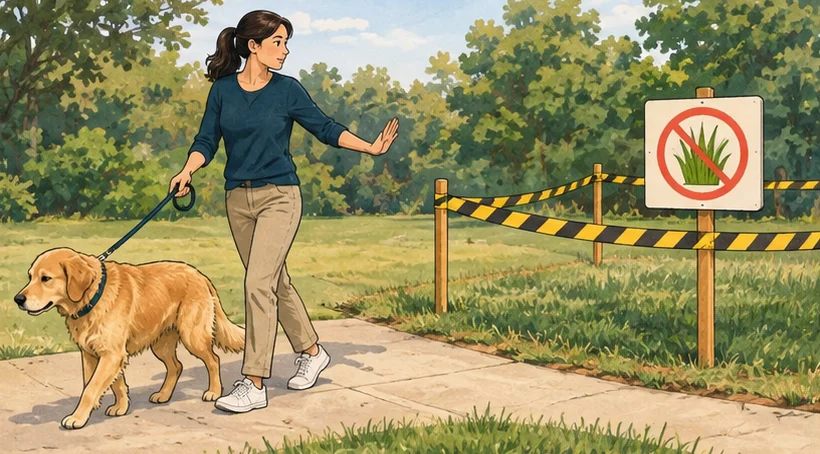
Grass from a yard or public area may have been treated with products such as herbicides or insecticides, which can harm dogs. ASPCA guidance on lawn and garden safety If you suspect the dog ate grass from a treated area, treat that as a possible exposure, not as ordinary grazing. The question is whether the dog may have reached a chemical, not whether grass eating itself signals illness.
Contact a veterinarian promptly if you know or suspect the area was treated. Share the location, approximate time, and any product information you can find. The available guidance warns that lawn chemicals may be toxic but does not provide a safe exposure threshold or a home treatment plan. Avoid estimating the risk from how much grass the dog ate or whether it currently looks well.
Keep the dog away from the area while seeking advice. If a product label or treatment notice is already available, keep its details to share with the clinic; do not approach a suspected hazard to retrieve information. If another person manages the property, you can ask whether and when it was treated, but do not delay contacting a veterinarian to get that answer first.
Do not induce vomiting or give a home remedy unless a veterinary professional directs you to do so. The veterinary guidance here does not establish a treatment for suspected lawn-chemical contact, so a clinic should guide the next step for the individual dog. A clear account of where the dog was and what might have been used is more useful than guessing from symptoms alone.
How to make a useful symptom log
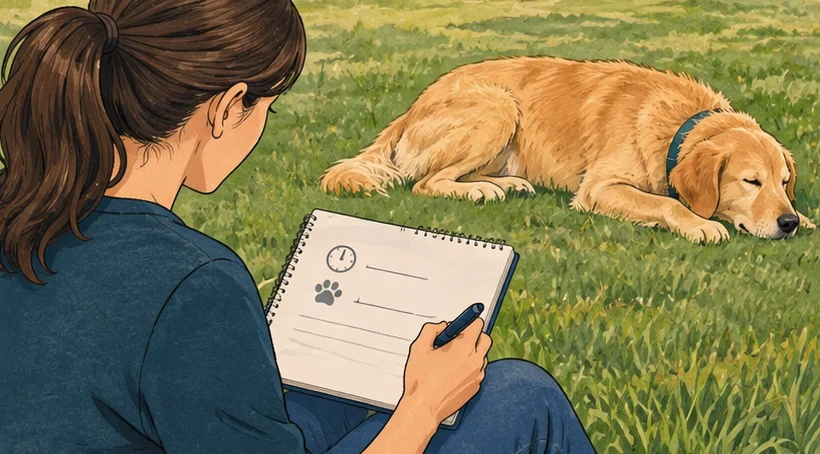
Start with the basics: when and where the dog grazed, how long it lasted, and whether the area might have been treated. Add what the dog was doing beforehand, such as walking normally or already seeming quiet. A yard, park, or shared green space provides context for a veterinary conversation, especially if you know who manages the area or have seen a treatment notice.
Next, record what happened afterward in plain language. Note whether the dog vomited, how many times, and whether there was retching, blood, or material that looked like coffee grounds. Include visible changes such as lethargy, a painful-looking belly, fever, or difficulty settling. Cornell identifies several of these signs as reasons to contact a veterinarian. Cornell University’s guidance on vomiting
Add what the dog did between episodes or later in the day. For example, “grazed in the yard at 8 a.m., vomited twice, and is now unusually quiet” gives a clinic a sequence of observable details. By contrast, “the grass made the dog sick” is an explanation you cannot confirm from the timing alone. The point of the log is to make the change and its timing clear.
Keep the record brief and update it if something changes. If another person was present, ask what they saw rather than filling in details from memory or assumption. For a suspected chemical exposure, include the location and any product or notice information you already have. Bring the notes to a call or appointment so the clinic can ask about specific gaps.
Choose a next step using the pattern
For brief, occasional grazing with no other change, observe the dog and note whether the behavior happens again. Grass eating alone does not identify a cause, and possible explanations include instinct, fiber, boredom, and anxiety. VCA’s overview of why dogs eat grass If grazing becomes frequent or is accompanied by a new sign, share that pattern with the dog’s veterinarian rather than assuming it proves illness or deficiency.
If vomiting repeats or the dog seems distressed, contact a veterinary clinic promptly and describe what you observed. Include changes such as lethargy, a painful-looking belly, or fever, and mention how long the vomiting has been happening. Cornell specifically advises calling for those signs and for vomiting lasting more than 24 hours. Cornell University’s guidance on vomiting Blood or coffee-ground-like material in vomit calls for a veterinary appointment.
If treated grass may be involved, keep the dog away and call a veterinarian promptly, even if no symptoms have appeared. Explain what makes you suspect treatment and provide the location and timing. This is a different decision from simply watching an otherwise normal dog after occasional grazing because the possible chemical contact is an independent concern. Do not wait for the symptom log to be complete before seeking advice.
Avoid changing food, giving medication, or trying a home remedy based only on grass eating. The behavior does not establish a nutrient deficiency, and the sources do not provide a home treatment for suspected exposure. For general pet-care reading, visit the Pet section. The Amader Poll Editorial Policy explains how our articles are prepared.
Frequently asked questions
Does eating grass mean my dog is nauseated?
No. Grass eating alone does not show that a dog is nauseated; look for vomiting or other changes in behavior.
Is vomiting after eating grass always an emergency?
Not necessarily. Repeated vomiting, distress, blood, or coffee-ground-like material warrants veterinary contact; vomiting lasting more than 24 hours is a reason to call.
Should I assume my dog has a nutritional deficiency?
No. Grazing alone does not establish a deficiency. Ask a veterinarian about recurring behavior or other changes rather than changing food based on grass eating.
What if I think the lawn was treated?
Contact a veterinarian promptly and share the location, timing, and any product information you already have.
What details should I tell the veterinarian?
Describe when and where the dog grazed, possible chemical contact, what happened afterward, and any changes in behavior or vomiting.
Should I stop every grass-eating episode?
Keep the dog away from grass that may have been treated. Otherwise, note whether grazing is occasional or accompanied by other signs.
The bottom line
The phrase dog eating grass symptoms can make ordinary grazing sound like a diagnosis, but grass eating alone does not show that a dog is sick or deficient. Look at the whole pattern: vomiting, distress, lethargy, a painful-looking belly, fever, blood, or coffee-ground-like material changes what you should report and when to seek veterinary advice.
If chemical exposure may have occurred, contact a veterinarian promptly and share what you know. For other episodes, keep a factual symptom log and call when vomiting repeats, signs are significant, or you are unsure how soon the dog needs care. A clear timeline helps the clinic respond to the dog’s actual situation.