
Football’s Most Coveted Individual Award and one of the most common questions among football fans – Who Deserves the Next Ballon d’Or Title?
In the world of football, individual awards rarely provoke argument as fierce, sustained, or global as the debate over the Ballon d’Or. Created in 1956 by the French magazine France Football, the award has evolved from a European-focused honour into the ultimate global recognition of individual footballing excellence. As football enters a new era — with a remarkable generation of young players challenging established hierarchies and the definition of individual excellence itself being contested — the question of who deserves the next Ballon d’Or has never been more genuinely open or more passionately debated.
This article examines the leading contenders for the next Ballon d’Or, the criteria that should guide the selection, the role of fan opinion in shaping the narrative, and why this particular football debate matters far beyond the ceremony itself.
External Reference: France Football — Official Ballon d’Or
What the Ballon d’Or Is Really Judging
The Official Criteria — and the Reality
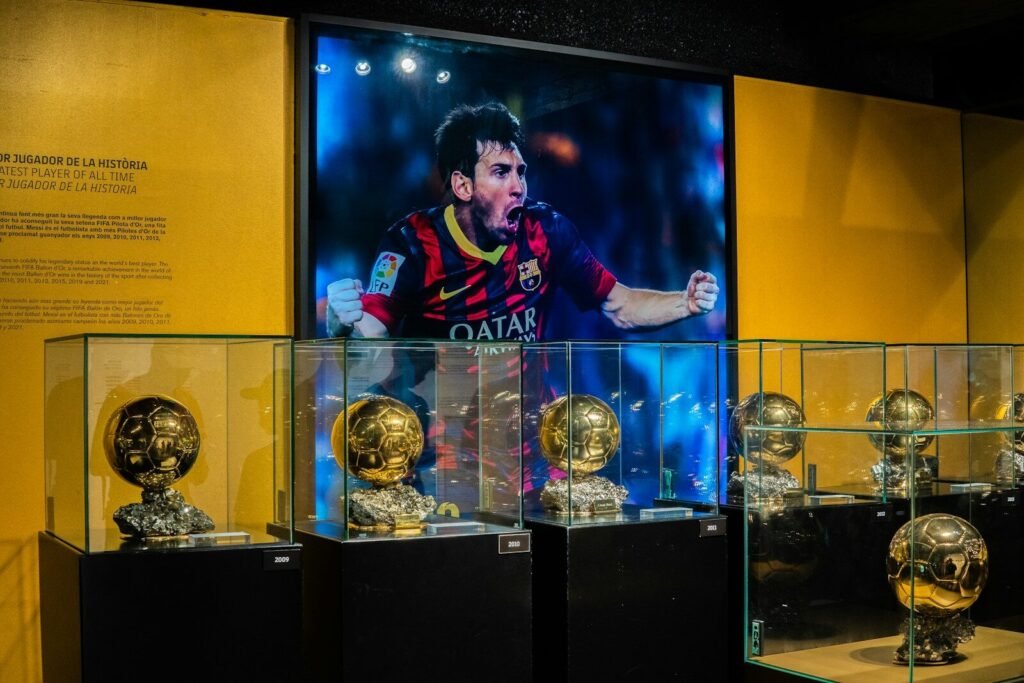
The official criteria for the Ballon d’Or are assessed on three primary pillars: individual performance during the calendar year or season, the player’s contribution to their club and national team’s collective success, and the player’s class and fair play. In theory, this framework rewards the complete footballer. In practice, the reality is considerably more complex.
Voters — a combination of national team coaches, national captains, and sports journalists from around the world — bring their own biases, cultural preferences, and historical loyalties to their selections. This means that the Ballon d’Or has always been as much a reflection of football’s global media narrative as it is a pure assessment of on-pitch quality.
The Debate Over Defensive Players
One of the most persistent controversies surrounding the Ballon d’Or is the almost systematic undervaluation of defensive players. Despite the sport’s tactical evolution — in which a world-class goalkeeper, central defender, or defensive midfielder can be the single most important player in a championship-winning side — the award’s voting history is overwhelmingly dominated by forwards. The handful of exceptions, including Franz Beckenbauer and Fabio Cannavaro, are treated as historical anomalies rather than evidence that the criteria genuinely encompass defensive excellence.
The Leading Contenders for the Next Ballon d’Or

Vinicius Jr — The Electric Brazilian
Vinicius Junior has evolved from a raw, talented teenager into one of the most electrifying and complete attacking players in world football. His combination of blistering pace, exceptional dribbling, improving final product in front of goal, and crucial contributions in Champions League football have made him a perennial Ballon d’Or contender.
What makes Vinicius particularly compelling is the context of his performances. He consistently produces his best football in the highest-stakes matches — Champions League knockout rounds, El Clásico encounters, and key domestic title races — which aligns with the narrative of greatness that Ballon d’Or voting tends to reward. In recent seasons, he has combined double-digit Champions League goal contributions with exceptional pressing statistics, making him arguably the most valuable attacking player in European football on measurable metrics.
Erling Haaland — The Goal Machine
Erling Haaland’s Ballon d’Or credentials rest on the most straightforward possible case: he scores goals at a rate that has no precedent in the modern game. The Norwegian striker’s combination of physical presence, intelligent movement, and clinical finishing has produced season goal tallies that have broken records standing for decades.
The question surrounding Haaland’s Ballon d’Or case is whether goal-scoring alone — even at historically unprecedented levels — is sufficient to claim football’s individual prize. Some analysts argue that the award should require a broader impact on matches. Others contend that the ability to score goals is the most fundamental and valuable skill in football, and any player who does it better than anyone in history deserves the highest recognition.
Kylian Mbappé — The Prodigy Seeking Redemption
Few players in football history have arrived at such a young age already carrying such enormous expectation. Kylian Mbappé has been considered a future Ballon d’Or winner since his emergence at Monaco in 2017, and his subsequent career has been defined by extraordinary highs — a World Cup triumph at 19, multiple league titles, Champions League prominence — and the frustrating question of when he will finally claim the individual award that many consider his destiny.
Mbappé’s move to Real Madrid represented the logical conclusion of his European career ambitions. A Champions League triumph with Real Madrid would almost certainly be sufficient to finally deliver the Ballon d’Or. His speed, goals, leadership, global profile, and capacity to decide knockout matches in moments of individual brilliance make his case compelling.
Rodri — The Midfield Maestro
Rodri’s 2024 Ballon d’Or victory — the first for a defensive midfielder in decades — represented a significant moment in the award’s evolution. It acknowledged that a player whose primary contribution is controlling matches, protecting his defence, enabling teammates, and providing the tactical backbone of one of football’s greatest club sides could be considered the most outstanding footballer in the world.
Whether Rodri can defend that recognition, and whether the voting body’s historical preference for goal-scorers and attacking players will reassert itself, will be a fascinating subplot of the next award cycle. His importance to Manchester City’s domestic and European success is almost impossible to overstate.
Lamine Yamal — The Next Generation
Barcelona’s teenage sensation Lamine Yamal has already announced himself to the world as a generational talent. His performances for Barcelona and Spain — including at UEFA Euro 2024, where he was one of the tournament’s standout players at just 16 — have generated a level of excitement around his potential that is genuinely rare in football. Whether Yamal is yet ready to compete for the Ballon d’Or depends on the immediate trajectory of his career and whether his club provides him with the platform to consistently perform at the highest European level.
The Criteria That Should Matter Most
Performance Over 38+ Matches, Not Just Highlights

A fundamental flaw in much Ballon d’Or debate is the tendency to focus on highlights — the spectacular Champions League goal, the tournament-winning performance — rather than the cumulative performance across hundreds of matches. True greatness is demonstrated not in the peaks but in the baseline: a player who performs at an extremely high level in every match is demonstrating something more valuable than a player who produces brilliant highlights but has significant valleys of performance in between.
Impact on Team Success
Club success has historically been the most reliable predictor of Ballon d’Or victory, not because the award requires it explicitly, but because the narrative framework around individual excellence tends to centre on players whose quality translated into collective triumph. The most intellectually honest assessment would attempt to isolate individual impact from collective context — to ask not “did this player’s team win?” but “how much worse would this team have been without this player?”
Global Representation and Fairness
An ongoing conversation in football surrounds the representation of players from different regions in the Ballon d’Or voting. Historically, the award has been dominated by European-based players, reflecting the dominance of European club football. As football’s global landscape evolves — with the Saudi Pro League attracting elite players, the MLS growing in stature, and domestic leagues improving globally — the question of whether the Ballon d’Or adequately captures global footballing excellence becomes more pressing.
External Reference: FIFA — World Football Governance
The Fan Voice — Does Public Opinion Matter?
Social Media and the Narrative War
The Ballon d’Or has always been influenced by narrative as much as by statistics or objective performance metrics. In the social media age, those narratives are constructed, amplified, and contested on platforms that give fans unprecedented power to shape the conversation. Fan campaigns for their favourite players, viral moments that cement a player’s claim in collective memory, and the sheer volume of social media engagement all feed into the media atmosphere in which voters make their decisions.
Should Fans Vote Directly?
Some football observers have argued that fan voting should be incorporated directly into the Ballon d’Or selection process, as a counterbalance to the institutional biases of the current voting system. Others contend that fan voting would simply amplify existing popularity biases, rewarding players with the largest global fan bases rather than those with the greatest on-pitch impact. The tension between popular legitimacy and expert assessment is a debate that shows no sign of resolution.
Conclusion
The debate over who deserves the next Ballon d’Or is ultimately a debate about what we value in football. Is it goals? Is it trophies? Is it consistent, match-defining quality that makes a team measurably better? There are no simple answers, and that is precisely why the Ballon d’Or conversation never ends. Whether your vote goes to Vinicius Jr’s electric brilliance, Haaland’s unprecedented goal-scoring, Mbappé’s gravity-defying pace, or one of the new generation’s emerging stars, the debate itself is part of what makes football the world’s game. Cast your vote — and make your case.
Reference: France Football — Ballon d’Or Official
Reference: FIFA.com